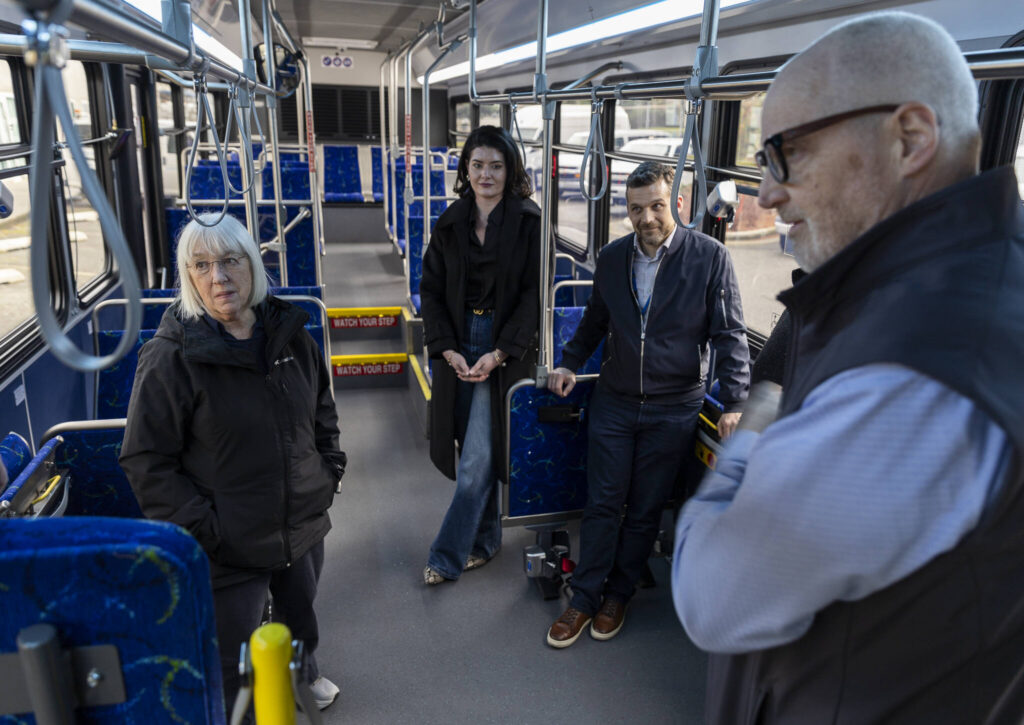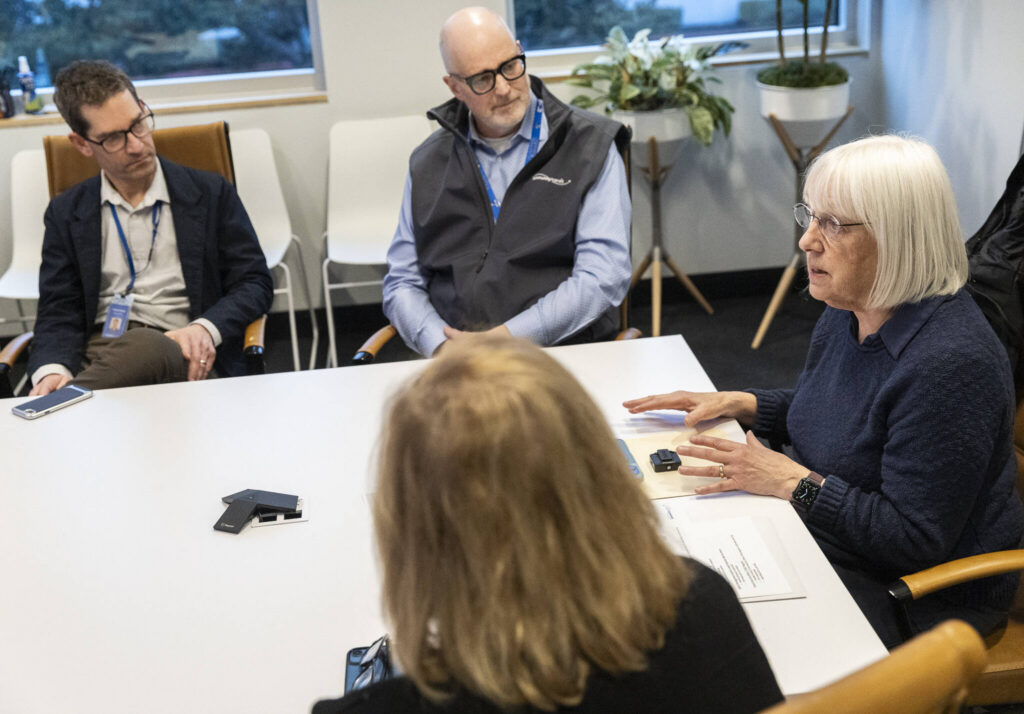
EVERETT — Community Transit officials shared updates on their ongoing and upcoming projects with U.S. Sen. Patty Murray, D-Wash., during a visit from the senator on Wednesday.
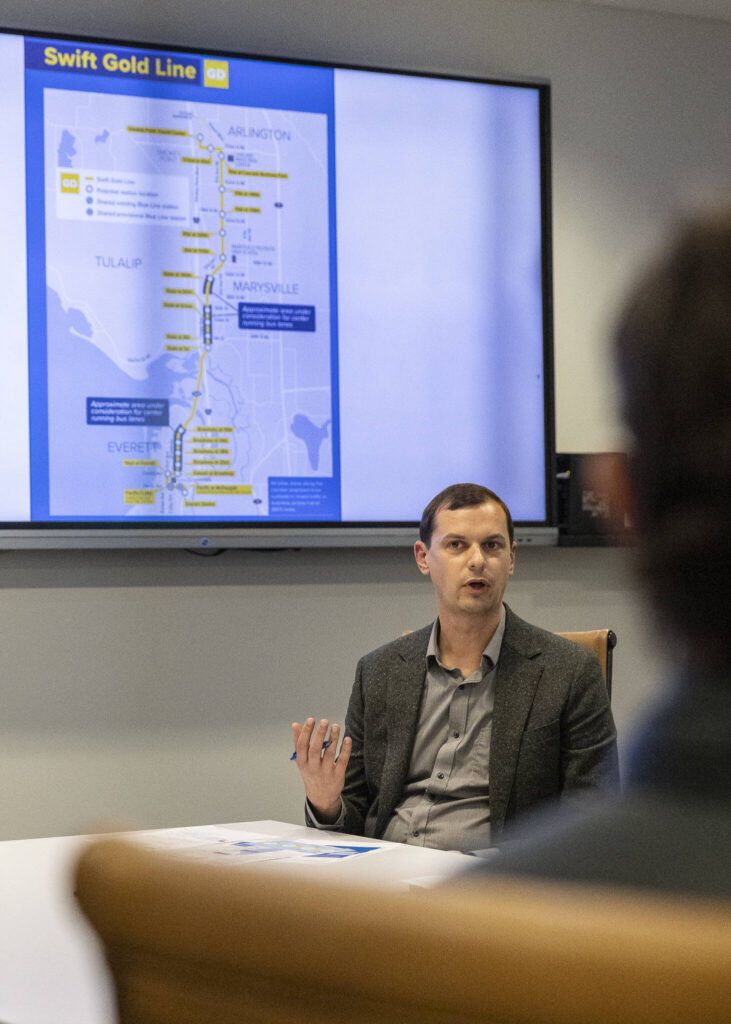
During the meeting, the Snohomish County transit agency showed the progress it’s made toward the first steps of implementing electric buses, expanding its microtransit service and building out a new bus rapid transit line, the Swift Gold Line, to serve Everett, Marysville and Arlington.
The Swift Gold Line was a main topic of discussion during a roundtable held as part of the visit, as the project, expected to cost upwards of $199 million — higher than previous estimates — will likely require significant state and federal grants to complete.
Community Transit officials said they are currently working on engaging with community members and city officials about aspects of the new bus line, including its most transformative potential feature, center-running bus lanes. Those lanes, which could be built in Everett and Marysville, would be important to the route’s success as it would allow buses to bypass traffic without taking away any driving lanes for other vehicles. Community Transit has said that building the lanes could improve travel times for not just the buses, but drivers as well.
“If we’re in the traffic lanes, we’re getting that same traffic congestion,” Director of Capital Development and Delivery Christopher Silviera said during the roundtable. “To make it a compelling alternative, that means making it a better or equivalent option than driving.”
CEO Ric Ilgenfritz said the agency hopes to show officials the potential benefits of the center-running lanes. When the city of Seattle implemented them for a new bus rapid transit line, the RapidRide G Line, travel times decreased significantly and transit ridership along the Madison Valley corridor grew significantly, The Urbanist reported.
“We’ve taken the burden of proof to show them that we can make this work without adversely affecting traffic or safety,” Ilgenfritz said during the roundtable. “In fact, we think we can improve the safety characteristics of the corridor.”
Community Transit said it is working on the preparation of its locally preferred alternative, an outline of the route, station locations and other design choices like the bus lanes that they can use to seek grant funding. It hopes to receive federal funding for the project by 2028 with a planned opening date of 2031.
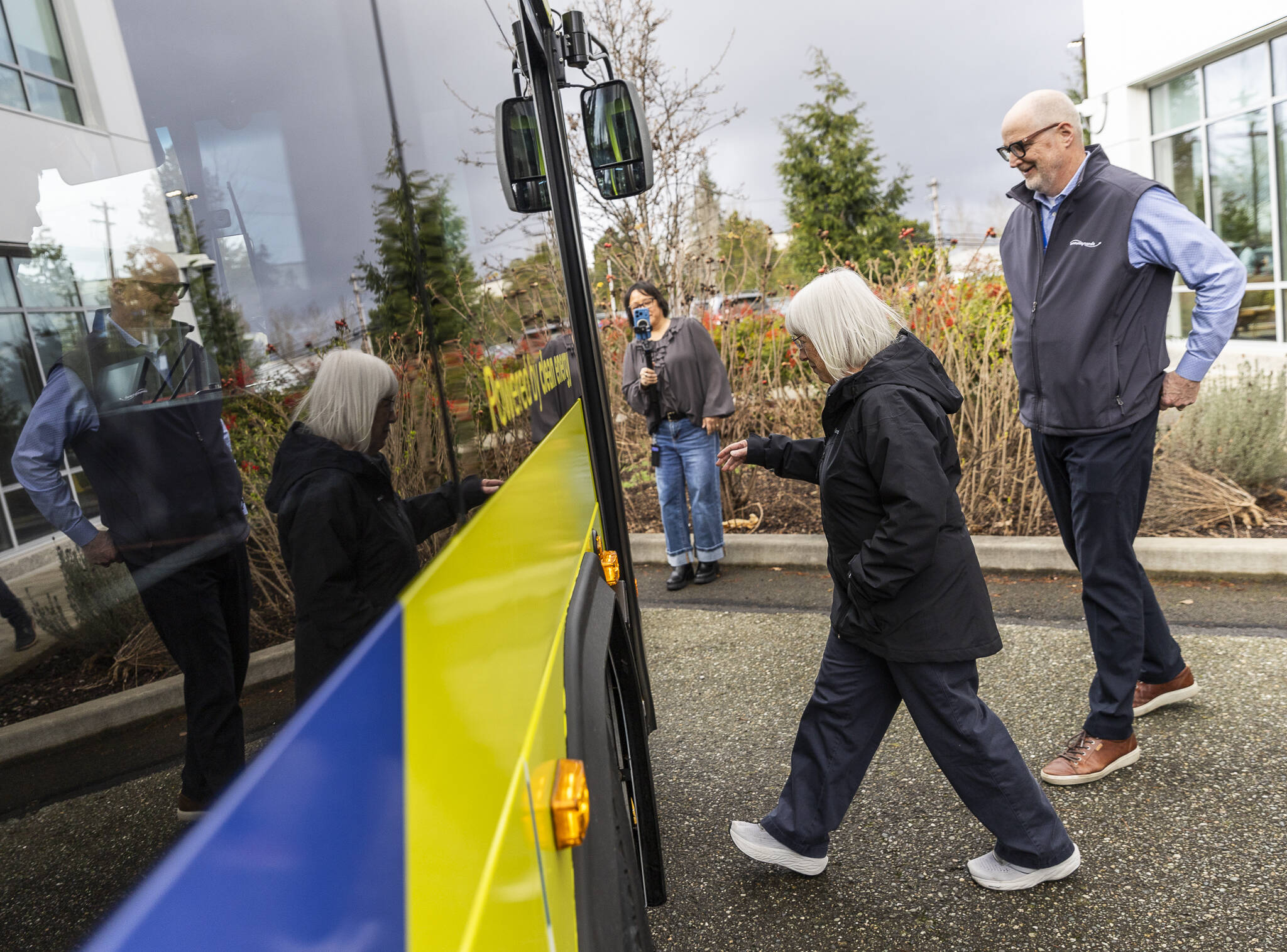
Murray also toured one of Community Transit’s new electric buses, part of a pilot program the agency hopes to expand in the coming years. By 2030, the agency expects that 30% of its bus fleet will be comprised of electric vehicles. Community Transit also shared a report about its growing Zip microtransit service.
During his administration, President Donald Trump has either halted or paused federal funding for a number of public transportation projects, including a rail tunnel between New York and New Jersey, a bus lane in New York City, an extension of Chicago’s “L” train and California’s high speed rail project. Murray said that in her role as vice chair of the Senate Appropriations Committee, she had worked to maintain funding for transportation grants after Republican lawmakers threatened to remove almost all of the available grant funds in a congressional spending bill. She also said she helped implement new oversight tools to ensure it’s more difficult to halt or remove federal funding appropriated to transportation projects.
“I’ve seen it work,” Murray said of public transportation services. “I’ve watched it grow here, I’ve seen it in other parts of the country, and I know how much people rely on it. So, fighting to make sure we keep those really essential programs and grants within the budget, and we don’t become a highway-only transportation system.”
Will Geschke: 425-339-3443; william.geschke@heraldnet.com; X: @willgeschke.
Talk to us
> Give us your news tips.
> Send us a letter to the editor.
> More Herald contact information.
Gallery