First payments from $500M opioid distributor suit due this week
Published 1:30 am Wednesday, December 28, 2022
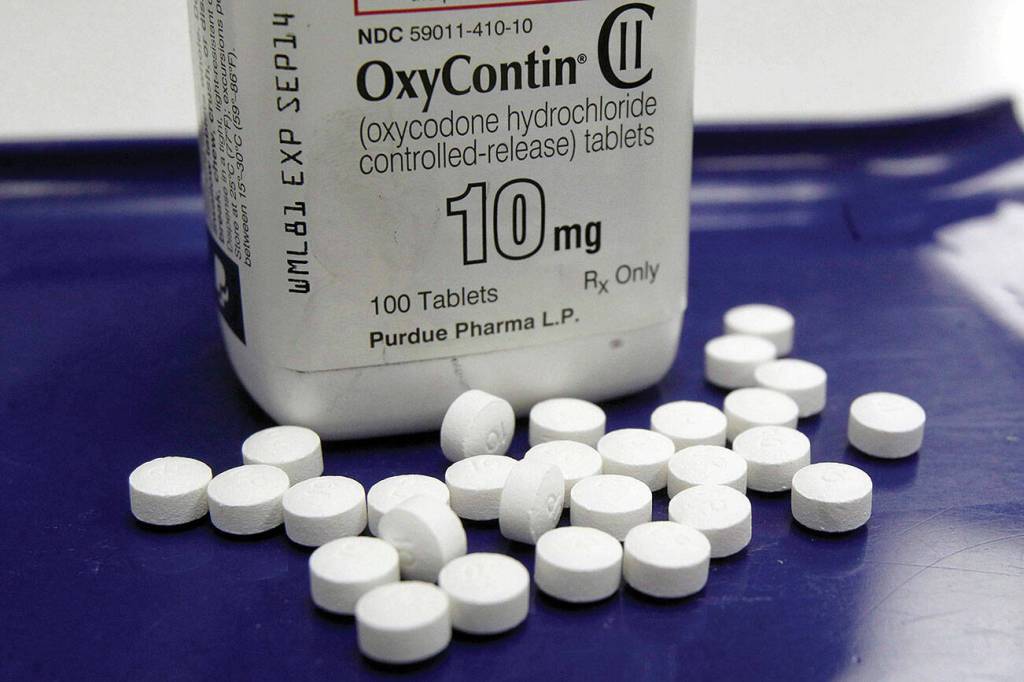


EVERETT — The first payouts from a half-billion dollar legal settlement with opioid distributors are due to reach bank accounts of cities, counties and the state by the end of this week.
Arrival of the dollars — as much as $2.7 million across Snohomish County — will sharpen the focus on how they are spent to combat an epidemic that’s taken thousands of lives and continues to wreak havoc on thousands more throughout Washington.
Payments, which will come annually through 2039, are intended for addiction treatment, prevention services, opioid education, support for first responders and other evidence-based programs and services.
Cities and counties can pool their dollars if they want. Leaders of Snohomish County and several of its cities are discussing such a path.
“We are truly trying to solve a crisis,” said Arlington Mayor Barb Tolbert. “For the first time ever there is a sustainable funding source for this problem.”
The settlement, reached in May, requires McKesson Corp., Cardinal Health Inc. and AmerisourceBergen Drug Corp. to pay $518 million to Washington in the next 17 years.
Of the total, $261 million will go to the state and $215 million to local governments for any of an array of uses outlined in Washington’s Opioid Response Plan, a broad strategy to address opioid use disorder. The rest is for attorney fees and legal expenses incurred by the state and local entities that had sued the three firms.
Overall, $25 million will make its way into Snohomish County where the county and 11 cities will get annual payments which will collectively total about $1.35 million a year. Per the deal, recipients will get a double payment this first year.
County Executive Dave Somers has begun a conversation with mayors on use of the dollars. Some initial ideas include expanding availability of naloxone kits for public employees and developing a rapid multi-agency response to hot spots for opioid use. Some cities, like Arlington and Mukilteo, want money to sustain their diversion efforts in which social workers are embedded with police officers.
“We realize this is impacting the whole county,” said Jason Biermann, a senior policy advisor tapped by county Executive Dave Somers to lead the effort. “We’re working diligently to be as collaborative as possible to maximize the settlement dollars.”
There are a few strings attached to the money to assure accountability.
Sums will be allocated by regions across the state. Within a region, counties and cities eligible for a share must form an Opioid Abatement Council or use an existing regional body to oversee distribution and use of dollars. The North Sound Behavioral Health Administrative Services Organization, which serves Snohomish, Island, Skagit, San Juan and Whatcom counties, is expected to be used for this role.
Snohomish County and cities would need to develop their own agreement to guide spending decisions.
Jason Cummings, incoming county prosecuting attorney, said a coordinated approach offers a better chance at achieving success in the long-term.
“I really want to see the cities and county partner to make sure we’re all going in the same direction,” he said.
Council Member Nate Nehring said Snohomish County should also consider teaming up with neighboring counties.
“Obviously this issue doesn’t have borders,” he said. “The more people we get on board the better. It’s a good opportunity to have a greater impact.”
County officials said they’d also like the local efforts to complement whatever the state might undertake with its share in Snohomish County.
In his proposed budget, Gov. Jay Inslee earmarked $61.5 million of settlement monies for opioid prevention and treatment services of which $12.4 million would go to federally recognized tribes for use in their communities. His proposal does not itemize spending for individual counties.
Among the ways he wants to spend it are on assistance for delivering parents with substance use disorders post-birth; a public education campaign about synthetic drugs, such as fentanyl; prescriber education; clinical consultation and discharge planning for emergency departments; technical support for jails offering medical opioid use disorder treatment; data collection and expansion of syringe service programs.
The House and Senate will each offer their own budget approaches in the upcoming legislative session. Final decisions are expected by the end of session in late April.
“This represents significant accountability for the opioid distributors that helped fuel the epidemic, as well as urgently needed resources to fight it.,” Attorney General Bob Ferguson said in October when the final pieces of the legal settlement were put in place. “The crisis is far from over. Our fight to hold these mega-corporations accountable will continue.”
Ferguson announced last week that Washington had signed onto resolutions of multi-state lawsuits with five other companies that produced or sold opioids — CVS, Walgreens, Walmart, Teva and Allergan. The settlements are not final yet. That will come when enough states sign onto the terms and enough local governments join in.
Those settlements could eventually net another $434.4 million to be evenly split between the state and local governments for opioid abatement programs and services. Those dollars would arrive in the course of the next 15 years.
Also last week, Ferguson sued Albertsons, Kroger and Rite Aid, alleging the companies’ pharmacy operations helped fuel the state’s opioid epidemic by failing to prevent overprescribing of drugs tied to thousands of overdose deaths.
“We want to make sure they pay for the damage they caused,” Ferguson said at a Seattle press conference.
Jerry Cornfield: 360-352-8623;