Futuristic zero-emission street sweepers could close climate gap
Published 1:30 am Sunday, March 12, 2023


EVERETT — Normally, when a street sweeper rolls down your block, you know it’s coming.
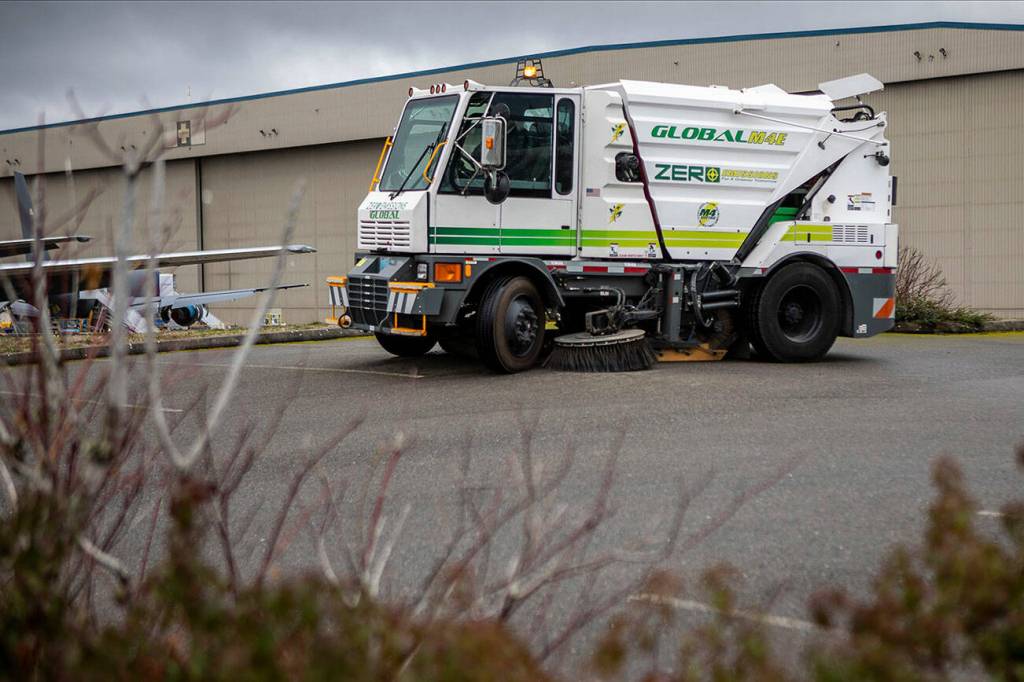
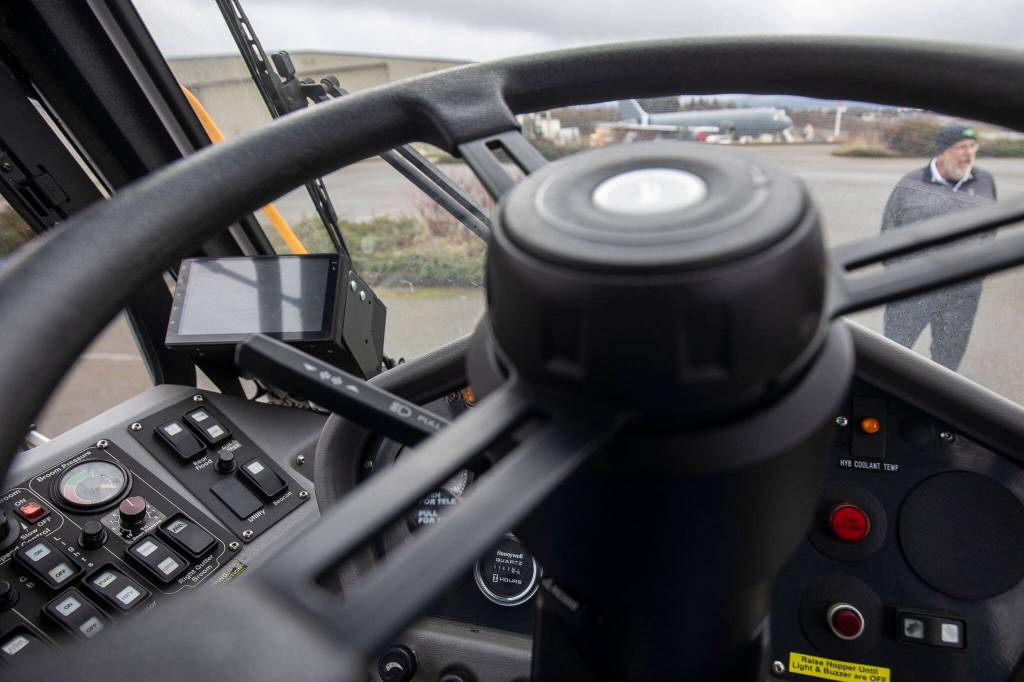
That’s not the case with the model Jim Budde piloted in tight circles around a Paine Field parking lot Friday morning. Budde, a regional salesman for Global Environmental Products, climbed into the cab, and the handful of gathered airport staffers and onlookers strained to hear the engine turning over.
“Is it on?” bystanders asked each other. Planes soared overhead from the nearby runway, easily drowning out the quiet hum of the sweeper as it began to make its rounds.
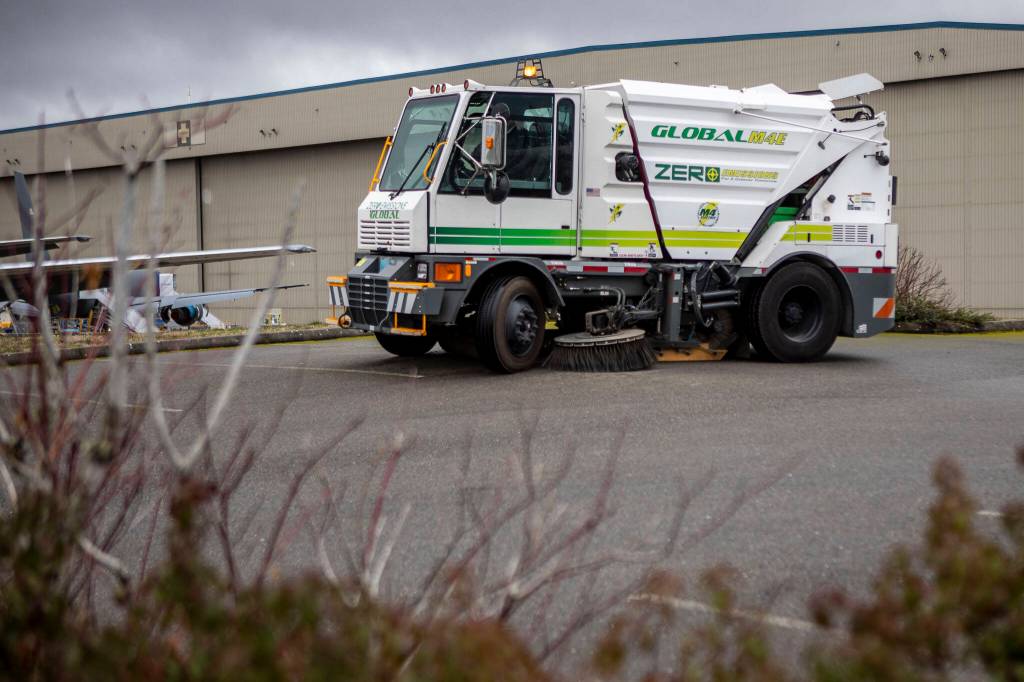
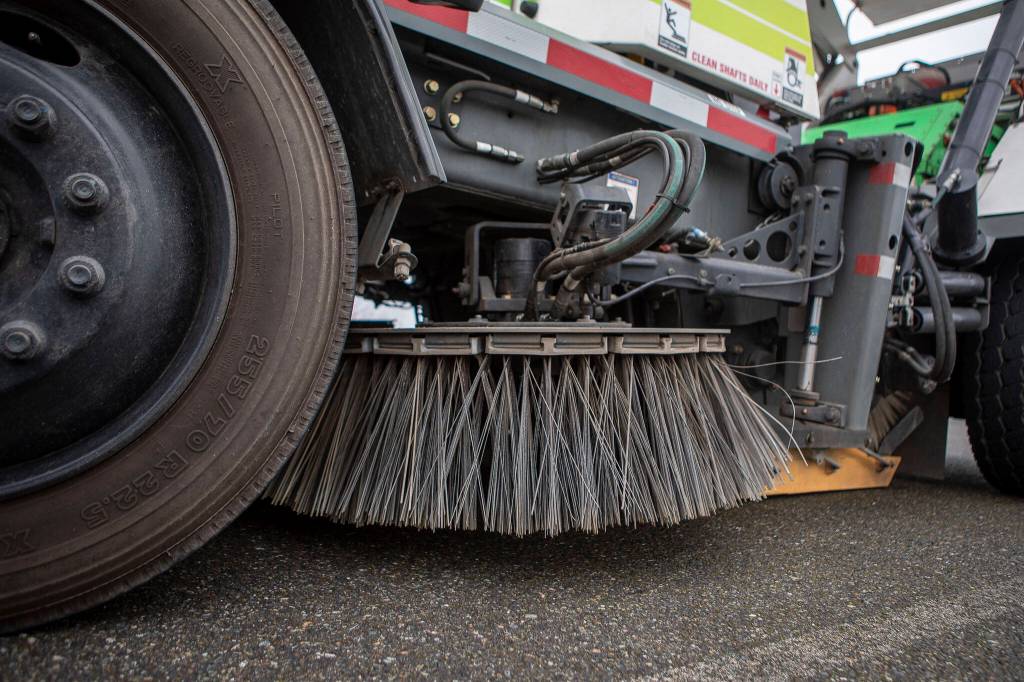
The machine looks just like the standard model you’d see on any downtown street, but with a twist. It’s all electric, creating zero emissions. As it sweeps the asphalt, no smelly diesel exhaust or harsh noise follow it.
Lobbyists with the group Climate Solutions hope to see more of these battery-powered sweepers tidying up around Washington, replacing the clamor and exhaust of their diesel counterparts. If a proposal allocating funds raised through the Climate Commitment Act toward purchasing zero-emission vehicles goes through in the state Legislature, you could see (but not hear) more like them in your neighborhood very soon.
Kristin Banfield, spokesperson for Paine Field, said airport administrators are considering adding their own electric sweeper to the fleet in the near future. It’s a healthy step towards Snohomish County’s climate goals, and plus, the airport just happens to be a near-ideal proving ground for more widespread use of large electric vehicles in the near future, Western Systems sales manager Tim Colvin said.
Thanks to its huge swath of perfectly flat runway, electric sweepers at Paine Field wouldn’t have to trudge up hills or navigate uneven terrain, which can significantly impact their efficiency and battery life, Colvin said. Once local leaders see the machine running smoothly under those circumstances, he expects more agencies and companies would feel comfortable looking into it for themselves.
The Everett-based Western Systems is the local distributor for the sweepers made by Global Environmental Products, and Colvin said he expects the airport to be one of the first to own one in the area.
Colvin and representatives from Climate Solutions have swept the Puget Sound region in recent days on a tour promoting the use of electric sweepers and other large vehicles as a key factor in meeting municipal climate goals. Cities like Vancouver and Bellingham have shown interest in making the switch, as have a handful of private companies, he said.
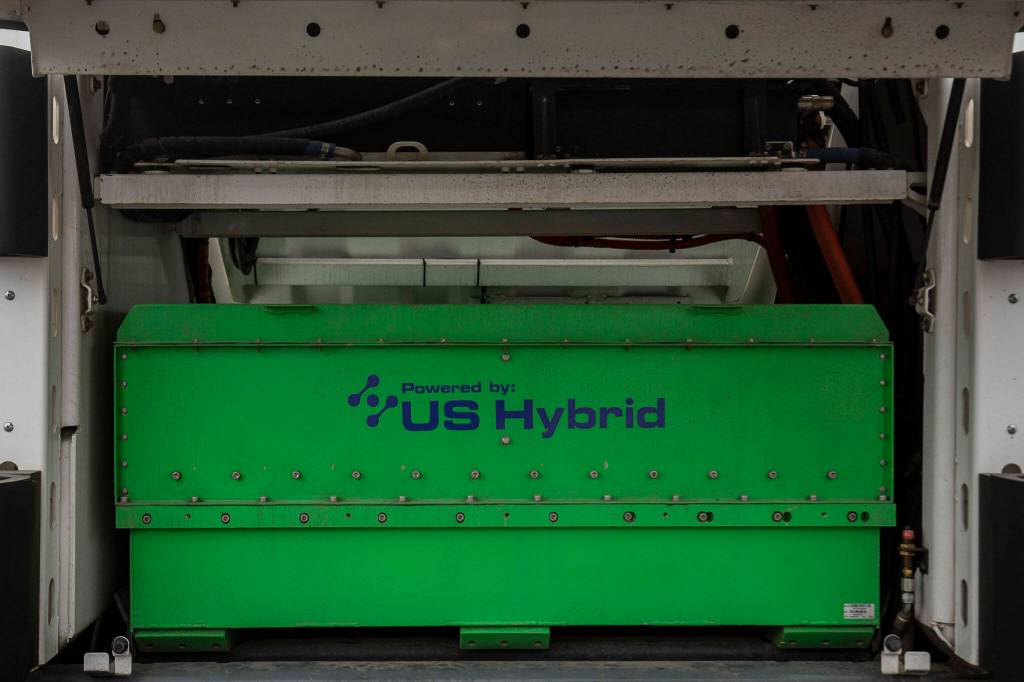
New York City already runs about 500 electric sweepers, Budde said, about 50 of which are hybrid hydrogen-electric models designed to better handle steep hills without sacrificing low emissions.
Many Washingtonians have embraced personal electric vehicles as a means of reducing emissions, with over 10,000 registered in Snohomish County and a steady increase in sales each year since 2021. But larger vehicles like semis, sweepers and buses have a lot of catching up to do, with less than 1 percent running on electricity statewide, said Climate Solutions transportation policy manager Leah Missik.
“It’s kind of strange to think that while these big vehicles are out keeping our streets clean, they’re polluting our neighborhoods terribly while they’re at it,” Missik said.
Several Washington cities have plans to electrify their bus fleets and other large city-owned vehicles, including Everett. City spokesperson Simone Tarver said nine electric buses currently serve Everett riders, with 10 more expected to join the fleet by early summer. The city plans to transition to a fully electric fleet by 2027, Tarver said.
But the price tag for such a transition isn’t cheap, with one of GEP’s zero-emission sweepers starting at about $700,000. Budde said a sweeper can run for seven to nine hours off a single overnight charge, use a plug-in charger like a standard electric car, and can even be upgraded to fast charging for an additional $120,000. The massive lithium batteries that power them are guaranteed for five years and can likely last much longer, but will eventually need replacing to the tune of $150,000 a piece.
Missik hopes that with help from the state, more cities and companies will start making the switch for other vehicles like sweepers. Her group is pushing for $250 million from the state Legislature to be put into point-of-sale vouchers. Under their proposal, when cities and companies go to purchase a large electric vehicle, the state-funded voucher will knock a chunk of the cost right off the top, lowering the risk for greater investment into such vehicles.
Backers say the investment should come from proceeds of Climate Commitment Act pollution allowance auctions. The first such auction earlier this month raked in $300 million, and Missik said the quarterly sales are projected to bring in about $1 billion per year toward funding climate policies.
“These medium-to-large vehicles are this huge source of emissions that we’re largely overlooking at the policy level,” Missik said. “With the help of vouchers, I think more places will start to see the value of fixing that.”
Riley Haun: 425-339-3192; riley.haun@heraldnet.com; Twitter: @RHaunID.