Judge denies request to exempt Flock footage from Public Records Act
Published 1:30 am Thursday, November 6, 2025
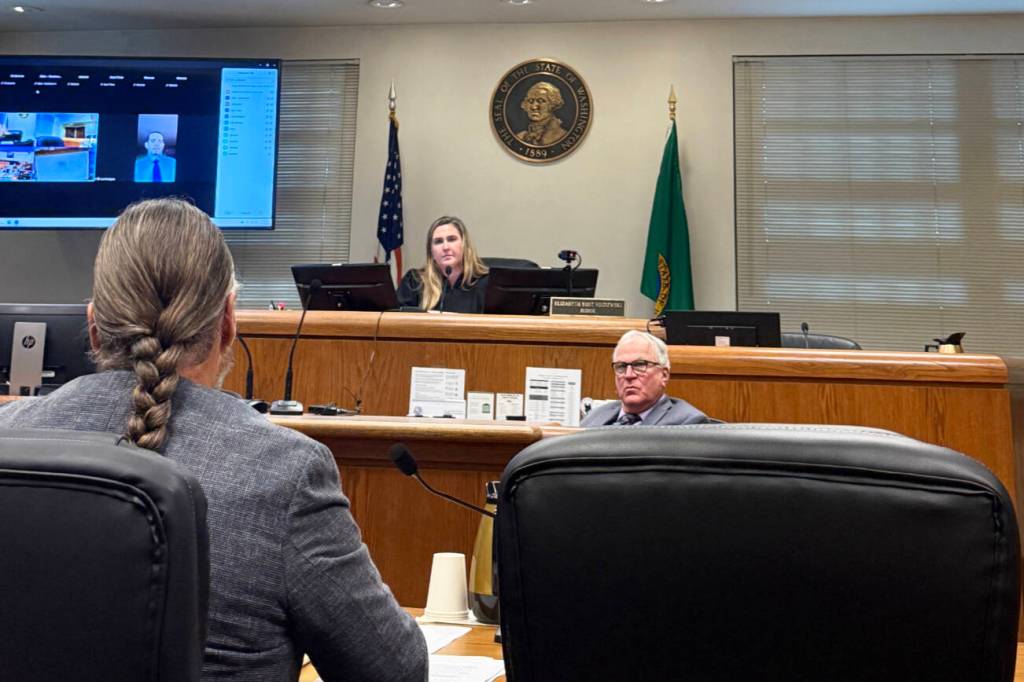
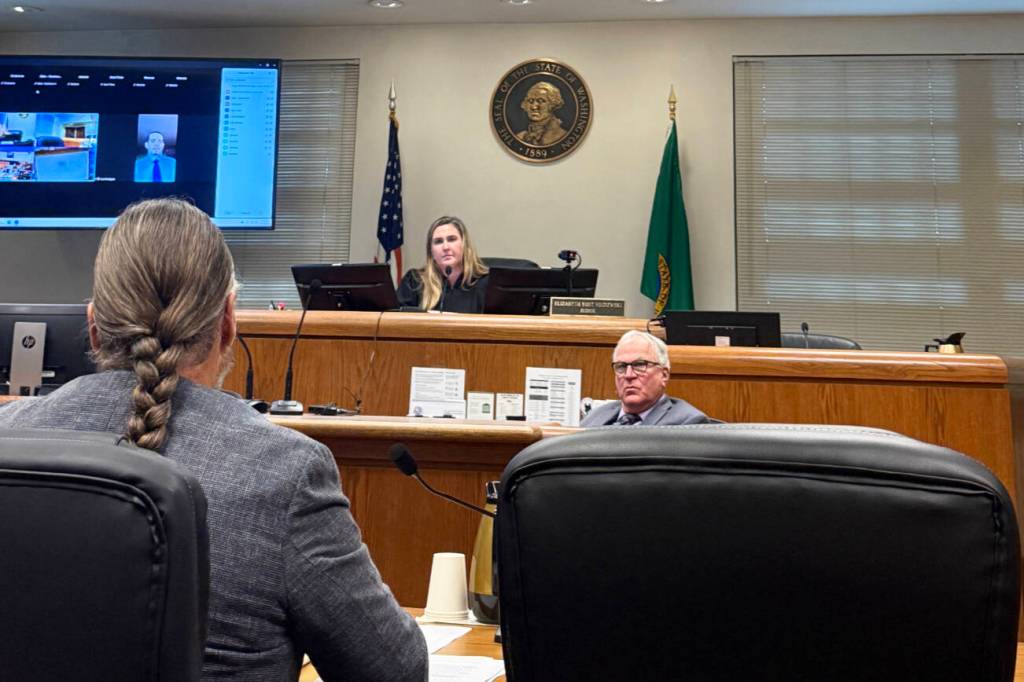


MOUNT VERNON — A Skagit County Superior Court judge denied a request from Stanwood and Sedro-Woolley to exempt Flock camera footage from the Public Records Act.
Judge Elizabeth Neidzwski said Thursday that Public Records Act exemptions don’t apply to the footage an individual requested from the cities and that the footage is considered public record.
Cities across Snohomish County were awaiting Thursday’s decision to gain clarity on how the state’s Public Records Act could apply to Flock camera footage. Some were waiting on the decision to determine whether or not to install Flock cameras at all.
In July, the cities of Stanwood and Sedro-Woolley filed a motion for a declaratory judgment after receiving public records requests for Flock camera footage. The cities argued Flock footage should either not be considered public record or be exempt from the Public Records Act for privacy reasons. Judge Elizabeth Neidzwski denied the motion Thursday.
In April, the defendant, Jose Rodriguez, requested all Flock camera footage in Stanwood from 5-6 p.m. on March 30. In May, Rodriguez made a similar request to Sedro-Woolley for all footage within a half-hour window. In both instances, Rodriguez requested footage that departments had not previously searched for the purposes of investigating a crime.
Flock cameras are a type of automated license plate reader. After Flock cameras capture the back of a vehicle, artificial intelligence analyzes the footage and creates terms for police to search. For example, an officer could search for a vehicle’s make, model, color, or even distinct bumper stickers or body damage, even if they don’t have a specific license plate number. Every time a vehicle passes a camera, the image and associated data are stored in the cloud for a default of 30 days, according to Flock. Any time within those 30 days, an officer can make a search and retrieve the data.
The Public Records Act exempts some records that contain specific intelligence information. Neidzwski said that because the records Rodriguez requested do not pertain to a specific case, the intelligence exemption of the public records act does not apply.
“I do think that the information at stake does have serious privacy implications, but that’s not the analysis for the intelligence information exemption,” she said. “You also have to make a finding that this is specific intelligence information that is compiled by investigative or law enforcement agencies, and the information that’s being compiled here does not relate to a specific case or investigation. The public already knows that these cameras exist and are operated. Many of them are in sight. The information does not disclose particular methods or procedures for gathering or evaluating intelligence information.”
The Public Records Act states that public records include information “prepared, owned, used, or retained” by an agency. Stanwood and Sedro-Woolley argued that Flock footage is only public record once a public agency extracts and downloads the data.
“Requiring public agencies to generate a new search in the Flock cloud system for the sole purpose of accessing and downloading data requested under the PRA, data which the agency had not previously accessed, would require the agency to create new public records not in existence at the time of the request,” Stanwood and Sedro-Woolley’s complaint read.
Timothy Hall, who represented Rodriguez in the case, argued that the footage is public record because it serves a governmental purpose.
“I don’t think there’s any real question that these are public records,” he said. “Government agencies do not need to possess documents in order for the Public Records Act to apply to them, and the Washington State Supreme Court has ruled on that issue. … So the fact that they can’t access their own records doesn’t in any way affect the Public Records Act or an individual’s ability to get records.”
Even if the footage is public record, the cities argued it should still be exempt from requests for privacy reasons. The Public Records Act exempts certain intelligence information that could jeopardize the effectiveness of law enforcement or a person’s right to privacy if released. State law does not explicitly exempt automated license plate reader data from public records, but it does have explicit exemptions for red-light camera data.
“This is about ensuring that this technology is utilized in an appropriate manner, that it protects the privacy interests of anyone, that these are not general surveillance tools, that this is very specific for law enforcement, care-taking functions, and that there are procedures, policies and protections in place to prevent misuse of that technology,” said Emily Guildner, who represented Stanwood and Sedro-Woolley in the case.
In May, Stanwood decided to pause its cameras until the court decided on the public records matter. The city approved a $92,000 contract with Flock Safety in November 2024. The cameras had been operating for about four months before the pause.
In response to Stanwood and Sedro-Woolley’s lawsuit, Rodriguez filed a lawsuit against Stanwood in Snohomish County Superior Court, alleging the city is violating the Public Records Act by not providing the footage. He filed a similar lawsuit in Lynnwood.
Mountlake Terrace has delayed installing its Flock cameras until the “current legal situation sorts itself out,” Mountlake Terrace City Manager Jeff Niten said at a September council meeting. The City Council approved a contract with Flock in June.
The town of Woodway delayed its vote to approve a Flock contract until a judgment was issued.
The cities of Arlington and Everett denied public records requests from The Daily Herald for Flock network audits, or logs of every search made on an agency’s network. Representatives from both cities told The Daily Herald the network audits were not considered public record because the agencies had not previously accessed the audits. The cities of Lake Stevens, Lynnwood, Marysville, Mill Creek and Mukilteo, however, provided their network audits to The Herald.
“The City has determined that the network audits are held by Flock, and because they have not been previously accessed by the City, they are not the City’s public records,” said Brent Flagg, public disclosure manager for the Everett Police Department, in response to The Daily Herald’s request.
On Thursday, Neidzwski said Flock camera footage is considered public record because the footage is used for law enforcement purposes. The case did not specifically address the issue of network audits.
“The information is prepared for the purpose of searching it and using it for public safety and law enforcement purposes, and the court finds that it does relate to the conduct of government,” she said. “Otherwise, the cities would not be paying to have it and have the system in place.”
The decision comes along with reports of federal agencies accessing Flock camera networks in Snohomish County, often without law enforcement’s knowledge. On Monday, Lynnwood Mayor Christine Frizzell announced that Lynnwood had temporarily paused its Flock camera network.
“I’ve taken the further step of pausing our ALPR program in its entirety until we can assess and fully ensure that the cameras are used in the manner that furthers our public safety efforts while appropriately balancing our community’s right to privacy in a manner that is sustainable for my staff,” Frizzell said on behalf of Police Chief Cole Langdon on Monday.
Jenna Peterson: 425-339-3486; jenna.peterson@heraldnet.com; X: @jennarpetersonn.