Larsen’s new migratory birds law means $6.5M per year in avian aid
Published 12:30 pm Friday, April 26, 2024





EVERETT — Since 1970, the North American bird population has decreased from an estimated 10 billion to almost 7 billion birds.
Migratory birds have suffered some of the steepest declines over the past several decades, according to a report by the Science journal. These birds especially benefit local ecosystems by controlling pests and pollinating plants.
A new law co-sponsored by U.S. Rep. Rick Larsen, D-Everett, reauthorizes a program to bolster migratory bird conservation throughout the Western Hemisphere.
Through 2028, the Migratory Birds of the Americas Conservation Enhancements Act will make $6.5 million available annually to nonprofits and environmental organizations across the country. President Joe Biden signed the bill into law Wednesday, after passing the Senate with a voice vote.
“These dedicated birders provide a boost to local and regional economies,” Larsen said on the House floor earlier this month. “They’re ambassadors for the great outdoors.”
The law also makes grants more accessible to small organizations. Previously, grant recipients had to contribute $3 for every $1 from the federal grant program. Now, organizations have to pay $2 for every federal dollar.
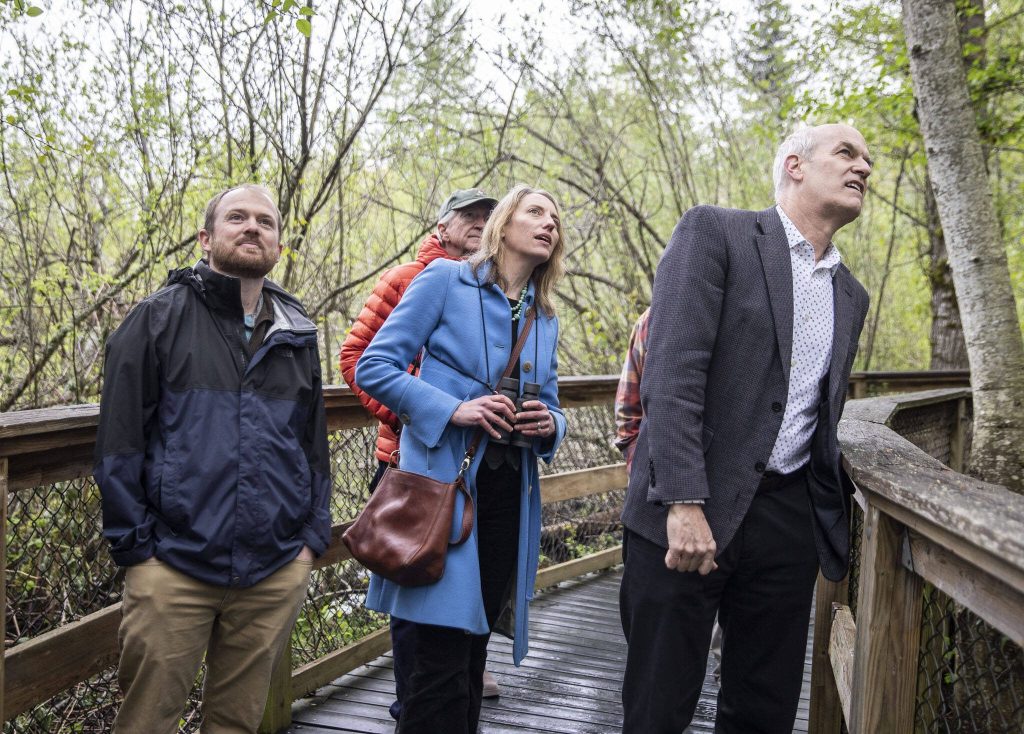
On Wednesday, Larsen met with local Audubon Society leaders at the Narbeck Wetland Sanctuary in south Everett to discuss the law.
“It’s a turning point for birds,” said Trina Bayard, director of bird conservation for Audubon Washington.
About 25 years ago, Snohomish County officials established the Narbeck sanctuary to counter development at Paine Field. Runway safety projects were expected to jeopardize several small wetlands on airport property, so the county set aside a little over 40 acres of wetland in Everett.
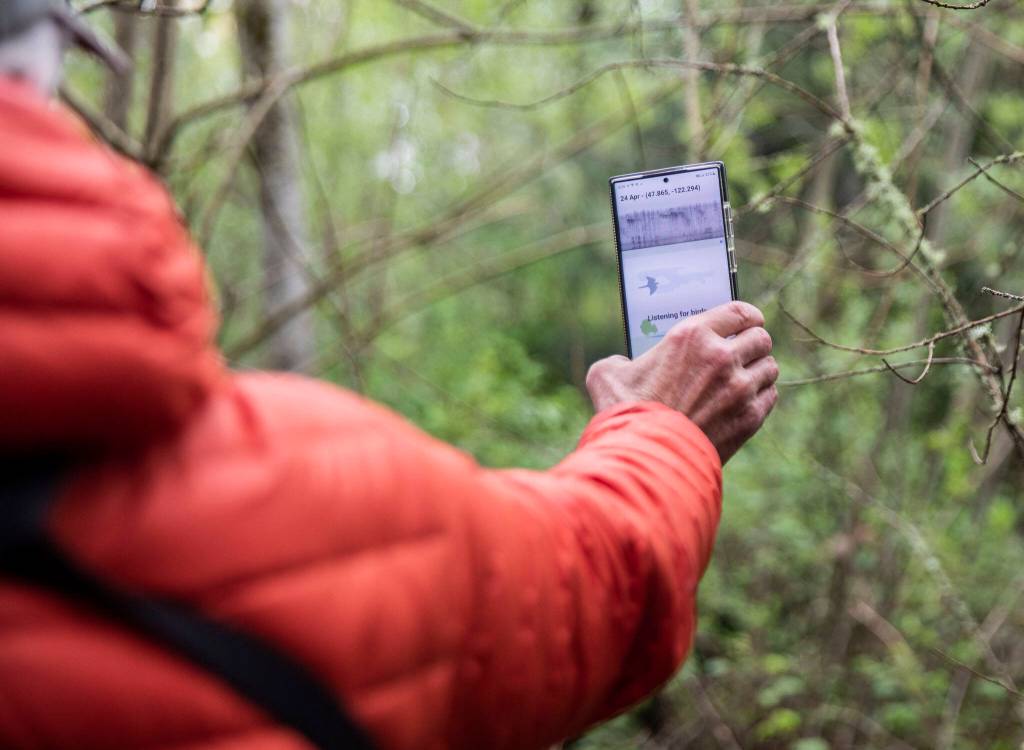
The birders walked along a slippery boardwalk, identifying local migratory species by sound and site. Larsen and Bill Derry, president of the Pilchuck Audubon Society, held their phones toward the trees in hopes the Merlin Bird ID app would pinpoint the sources of chirps and songs.
The group saw the bright belly of a yellow warbler, noting the slight red streaks on the bird’s breast. Bayard heard the high-pitched chip of the orange-crowned warbler. Despite its name, the bird is more olive-tinted.
Both of the warblers spotted Wednesday migrate to the United States in the spring from Mexico and the northern tip of South America.
In other parts of Snohomish County, Vaux’s swifts have started migrating back to local chimneys, said Brian Zinke, executive director of Pilchuck Audubon.
The advisory group for the federal migratory bird fund has historically awarded grants to habitat projects throughout the United States, Canada, Central and South America and the Caribbean.
The program, established in 2000, has awarded over $89 million to bird conservation projects and protected more than 5 million acres of bird habitat.
From 2002 to 2015, the program funded eight projects in Washington, according to U.S. Fish and Wildlife Service data. Some bird advocacy groups used money to monitor raptor migration in the Pacific Northwest, while others preserved oak habitats for several local bird species.
Local Audubon Society leaders were unsure Wednesday if their organizations would qualify for grants under the reauthorized federal program. But they were thankful for Larsen’s bird advocacy on the national stage.
Ta’Leah Van Sistine: 425-339-3460; taleah.vansistine@heraldnet.com; Twitter: @TaLeahRoseV.