Officials create a no-protest zone around Planned Parenthood
Published 1:30 am Sunday, April 25, 2021
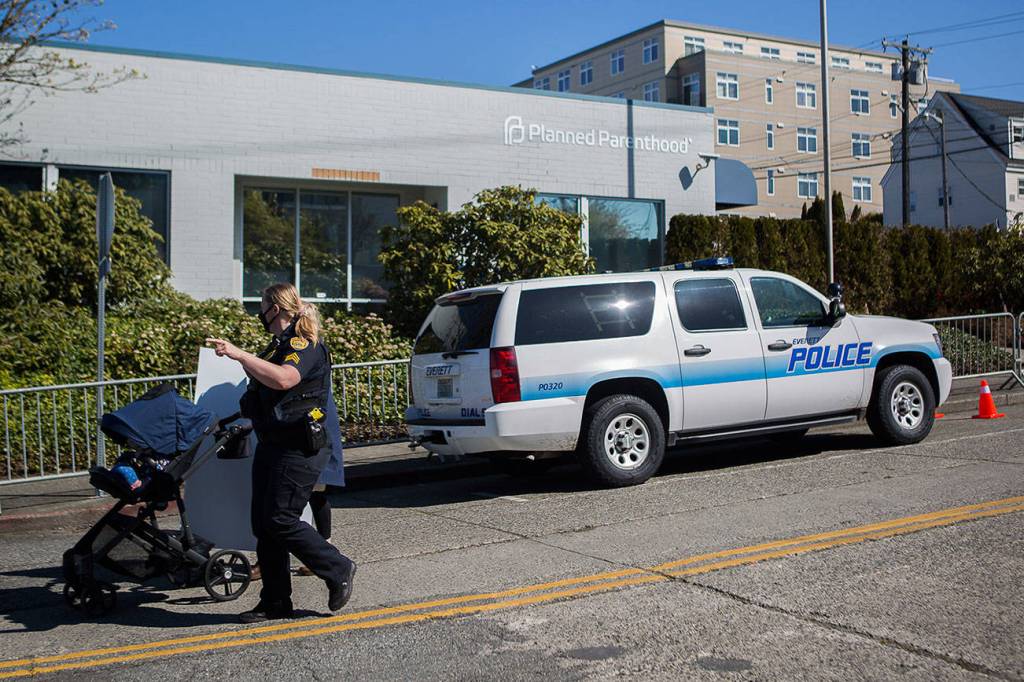
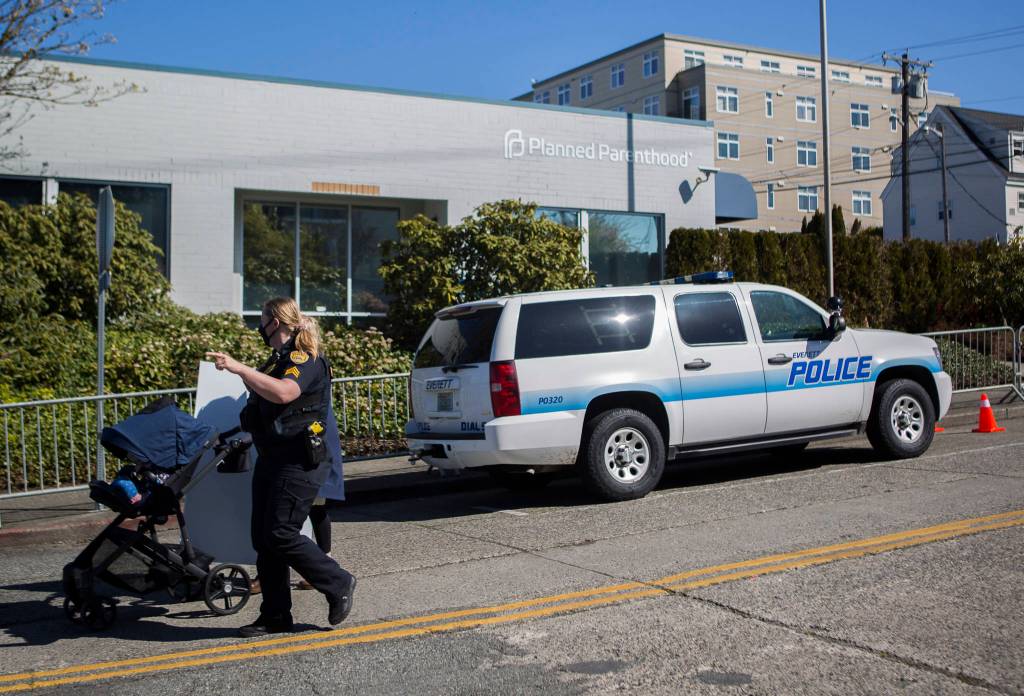
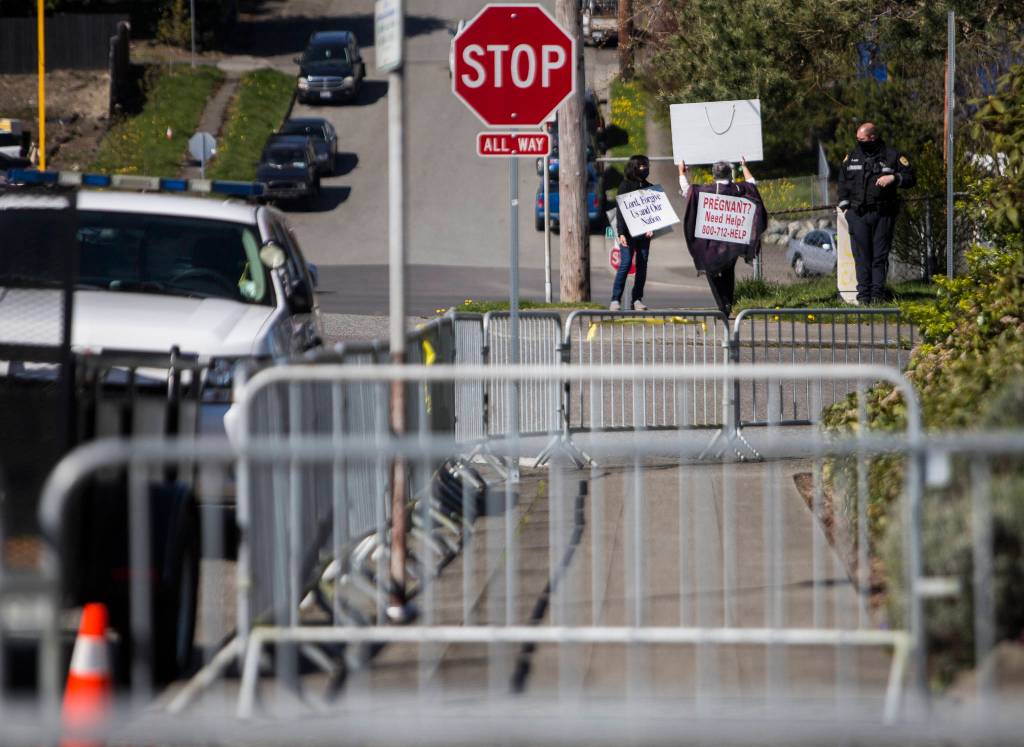
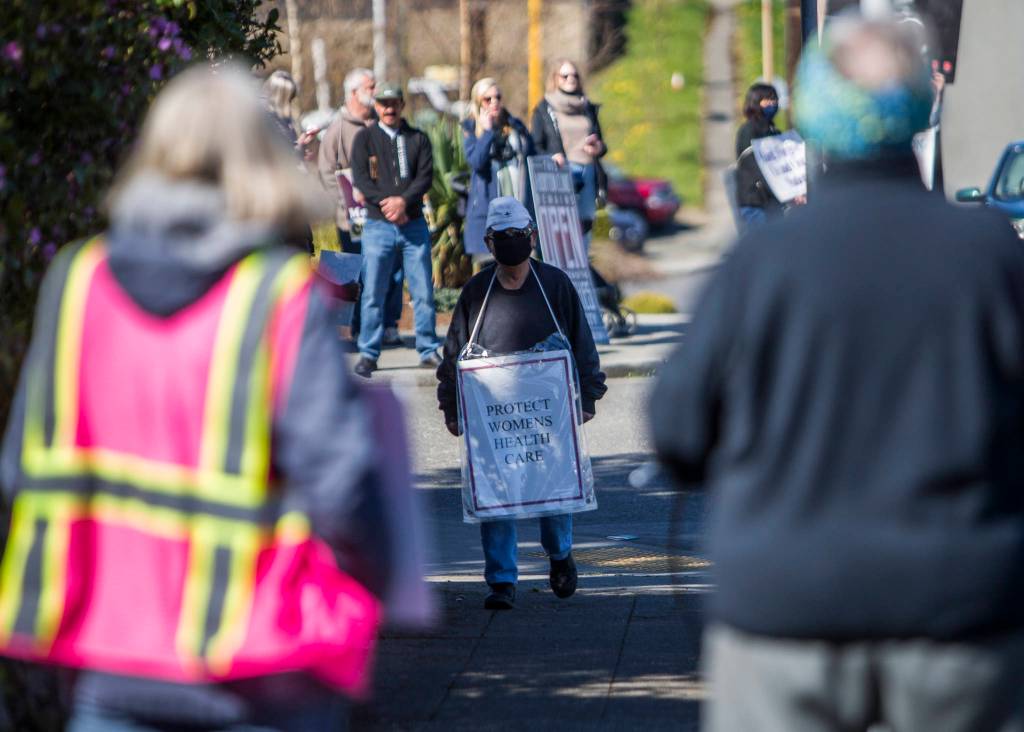


EVERETT — The city has been setting up a fence barrier around Planned Parenthood in north Everett, separating protesters opposed to abortion and counter-protesters who aim to protect the patients and staff from harassment.
Enforced by Everett Police Department officers, the “time-place-manner restrictions” for weekly Wednesday and monthly Saturday gatherings are meant to keep the peace and support First Amendment rights, city officials said. Doing so created a no-protester zone around the health clinic and its adjacent alley and sidewalk. These kinds of restrictions are allowed by federal law and legal precedent.
Planned Parenthood is on 32nd Street, between Colby and Hoyt avenues. A deputy city attorney and Everett police captain said events outside the clinic were becoming a public safety concern and spurred the city to act.
“Basically we are trying to keep the two groups separated from each other and in a location where there is minimal impact of other uses of the area,” Everett deputy city attorney Ramsey Ramerman said.
There had not been any arrests or charges, officials said, which they credited to protesters’ compliance with the rules and officers working with them. But some pushing and shoving in March led the city to move the groups away from the clinic entrance and split them up.
Previously, protesters opposed to abortion mingled together on the sidewalk near the driveway. From there, the anti-abortion crowd could speak at people, often women, entering and exiting the clinic, referring to abortion as “murder.” In videos published on YouTube from recent months, some people urge women to not enter.
Sometimes women respond. In a video dated Feb. 24, a woman holding a young child walks toward the crowd and says, “This place gave me her, so stop,” before walking away and into the clinic. Later she comes out, passes the crowd and walks over to speak with police officers.
The counter-protesters clang noisemakers, blare a megaphone horn, swear at the clinic opponents, and yell, “Stop clinic harassment,” over them.
“I do respect the First Amendment right to protest against it, even if I disagree with it,” said Olushola Bolonduro of Everett, who joined the clinic supporters earlier this year. “But I felt they were harassing people who were going in.”
Everett 40 Days for Life, a group that has opposed abortion at the Everett clinic since 2007, has an email list of about 300 people, member Ed Mohs said. People sign up for one-, two- and three-hour shifts any day of the week during Lent in spring and from late September to early November. They usually show up in their largest numbers Wednesdays. Some carry signs that read “Abortion hurts women,” “Women don’t deserve abortion,” and “Pray to end abortion,” Mohs said.
“For most of us, it’s quiet, prayerful and peaceful,” he said. “Typically we’re not there to yell. … Sometimes when you want to get somebody’s attention, you can’t whisper.”
Other anti-abortion groups organize gatherings there as well.
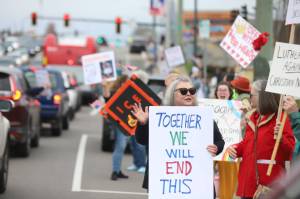
Their regular presence has drawn counter-protestors, who act as a human barrier against the anti-abortion crowd.
“We all try to maintain as much civility on the sidewalk as possible,” said Janean Desmarais, an Everett resident and regular counter-protester at Planned Parenthood. “Sometimes it’s just not possible. If they weren’t out there, we wouldn’t be out there.”
Those who oppose the health care facility now do so from the southwest corner of the nearby intersection.
People supporting patients and staff are on the sidewalk south of the clinic.
A short fence was put up along the sidewalk and alley to mark the restricted area. The driveway and sidewalk are not impeded by the barrier.
The city enacted place and manner restrictions based on case law and has not had a court order to do so, said officer Aaron Snell, a spokesperson for the Everett Police Department.
Across the state, a Spokane Superior Court judge in September ordered those kinds of restrictions to anti-abortion protesters across the street from a Planned Parenthood clinic, as reported by The Spokesman-Review. That decision was separate from the clinic’s lawsuit filed in June against the group called the Church at Planned Parenthood and its leaders.
“There’s always a delicate balance between the First Amendment rights, protecting the First Amendment rights of protesters, and ensuring that patients can access health care without reasonable interference,” said Kim Clark, a senior attorney with Legal Voice, which represented Planned Parenthood in the lawsuit.
Noise ordinances are an example of time-place-manner restrictions, she said.
“When it’s not one person but 40 people, or it’s one person with an extremely loud megaphone and they’re screaming into the building, or it’s one person obstructing access to the facility and it’s the only sidewalk one can use, then that’s different,” Clark said.
Before the Wednesday gatherings in Everett became subject to the restrictions, a monthly Saturday gathering was a public safety concern for at least 1½ years, Everett Police Department Capt. David Fudge said. The city has enforced place and manner restrictions during that event, too.
“We institute time, place and manner when we have a concern,” Fudge said. “There are people who protest, rally, pray, do whatever they want, and we don’t institute time, place and manner because there isn’t a public safety concern.”
Everett 40 Days for Life isn’t associated with that event outside of their shared interest in opposing abortion, Mohs said.
The groups’ separation has “definitely toned down” interactions between them, but Mohs said it is not a permanent solution. He also contends the city is wrong to deny him and anyone else use of the public sidewalk.
Fudge said the different locations still allow the groups “a more than reasonable opportunity to get their views out.”
Desmarais said the city should consider implementing a buffer zone prohibiting demonstrations and protests when the clinic is operating. But the Supreme Court struck down a similar Massachusetts law, which had permitted 35-foot buffer areas, in 2014.
Washington has had a law, RCW 9A.50.020, making it illegal to interfere with access at a health care facility or disrupt its normal functioning.
“Washington has a strong statute on the books; it’s really a matter of enforcing that,” she said.
For Bolonduro and other clinic supporters, the restrictions are a win for now.
“They’re just too far away to reach out to them (at the clinic),” he said. “That’s exactly what me and others have wanted.”
Ben Watanabe: bwatanabe@heraldnet.com; 425-339-3037; Twitter @benwatanabe.