Historic change: State property tax climbing to fund schools
Published 1:30 am Thursday, June 29, 2017
OLYMPIA — The largest state property tax increase in Washington history is the centerpiece of a plan released Thursday to boost funding for public schools as demanded by the state Supreme Court.
Under the agreement, the state will pour an additional $1.8 billion into public schools in the next two years and another $5.5 billion between 2019 and 2021. Those dollars will go to address the education funding mandate of the court’s McCleary decision.
Release of the McCleary agreement overshadowed the reality that lawmakers headed to dinner Thursday without having seen a copy of the two-year state budget. The spending plan must be passed and sent to the governor for signing by midnight Friday to avert a government shutdown.
Absent details of the entire budget, the focus Thursday was on the McCleary piece.
A chunk of the increase in school spending in the next two years will cover the portion of wages of teachers, administrators and classified staff that school districts now pay, a situation the court said had to end. There’s also money to boost starting pay for new teachers and increase salaries of thousands of teachers statewide.
Additional money is set aside for the Learning Assistance Program as well as highly capable students and those with special needs.
Many of the new dollars will come from hiking the state’s common school levy to $2.70 per $1,000 of assessed valuation, a whopping 81-cent increase from the current level. The increase, expected to generate an estimated $4.1 billion in the next four years, would go into effect in 2018.
But while everyone can expect to pay more property taxes to the state, many will end up paying less in levies to their local school districts.
As part of the agreement, the maximum amount of maintenance and operation levies will be $1.50 per $1,000 of assessed value of property or $2,500 per pupil, whichever is less. In districts with high property values, it is unlikely they will be able to charge the full $1.50.
The plan, spelled out in a 120-page bill, makes an historic investment of state dollars into schools around the state, Democratic and Republican lawmakers said. And it will erase much of the inequity in their levels of funding, they insisted.
“It heals a wound that has been festering for about 30 years,” said Sen. Ann Rivers, R-Vancouver, one of eight lawmakers involved in the months of closed-door talks developing the deal. “It closes the gap of the haves and the have nots and no longer will a child’s education be determined by their zip code.”
Rep. Lillian Ortiz-Self, D-Mukilteo, a member of the House Education Committee, told a group of teachers standing outside the House chambers that “It’s not perfect but I think we do a great job in getting out the message that want our teachers to stay.”
Information posted online Thursday night shows how much more money from state and local taxes each school district stands to receive under the plan.
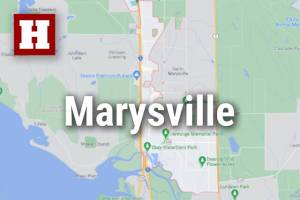
In the 2018-19 school year, the increases per student would be $1,398 in Everett School District, $1,291 in Marysville School District, $1,120 in Granite Falls and $1,693 in Edmonds.
Sen. Steve Hobbs, D-Lake Stevens, said when teachers, parents and students see the numbers in the plan, “I think they’ll be very happy about it. It is a good bipartisan agreement. It addresses all the issues of McCleary.”
Justices ruled in 2012 the state system of funding public schools was unconstitutional. They made clear the state needed to provide ample funding from a reliable and sustainable source and to ensure school districts no longer rely on local property tax levies to pay employee salaries and other basic education expenses.
The court has long demanded a road map from legislators showing exactly what they were intending to do and when they were going to do it. Justices found the state in contempt in 2014 for failing to deliver a plan. The next year they imposed a $100,000-a-day fine, which has been accumulating and now stands at nearly $70 million.
Lawmakers must file a report with the court on their actions this session and then wait to learn if they’ve done enough to avoid any further punishment.
Under the McCleary agreement, starting pay for new teachers will be a minimum of $40,000 beginning with the 2018-19 school year. And the state will fund a minimum salary of $64,000 for teachers, $95,000 for certificated administrative staff and $45,912 for classified staff by the 2019-20 school year.
In addition, employees may be eligible for additional pay based on the cost of living of where they work. This could lead to state-funded salaries of up to $82,081 for teachers, $121,839 for administrators and $58,883 for classified staff. The bill also requires regular annual adjustments for inflation.
Lawmakers once again agreed to suspend provisions of the voter-approved class size reduction measure, Initiative 1351, that pertain to fourth through 12th grades. But they did agree to provide money for smaller class sizes for Career and Technical Education and Skill Centers. And they are funding three more professional development days for teachers.
This agreement touches on every aspect of the funding and operation of public schools with some changes having the potential to immediately affect local school districts. And there is a “hold harmless” clause to ensure no district receives any less money as a result of the changes.
For example, there will be new definitions of how school districts can spend the money collected from local levies. And that could affect collective bargaining negotiations under way in school districts in Marysville, Snohomish and around the state.
Jerry Cornfield: 360-352-8623; jcornfield@heraldnet.com. Twitter: @dospueblos.