Supreme Court strikes down state’s death penalty law
Published 1:30 am Thursday, October 11, 2018
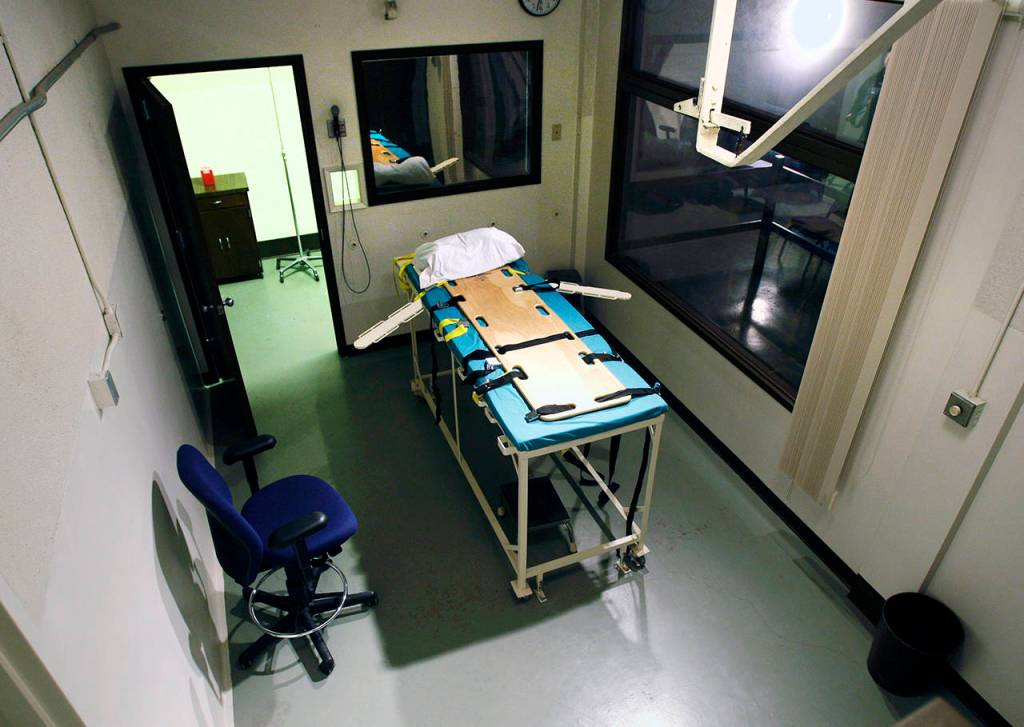


OLYMPIA — Use of capital punishment effectively ended in Washington when the Supreme Court ruled Thursday that the state’s death penalty law is unconstitutional.
Justices concluded the law is imposed in an arbitrary and racially biased manner, and converted all death sentences to life imprisonment.
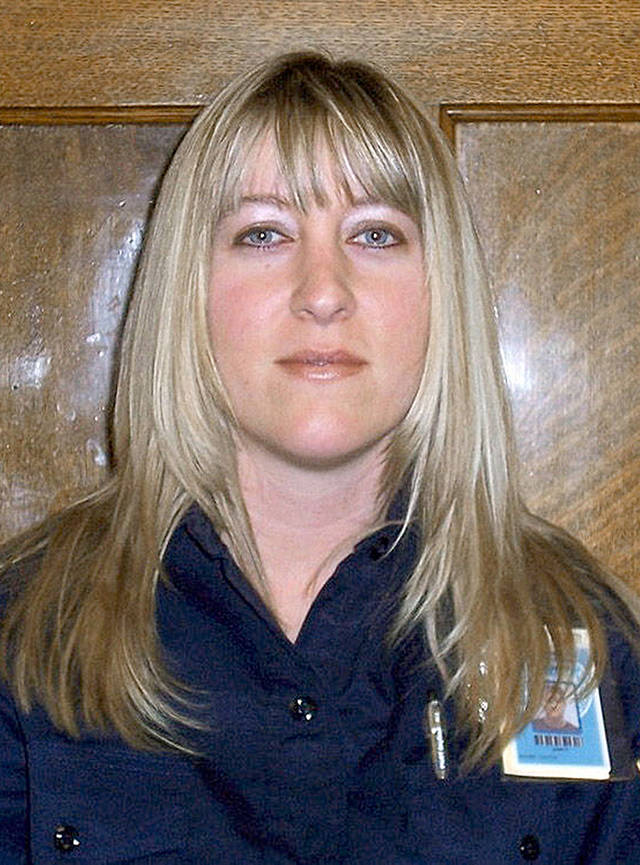
This means Byron Scherf, who murdered Monroe corrections officer Jayme Biendl in 2011, and seven others on death row will now spend the rest of their lives behind bars.
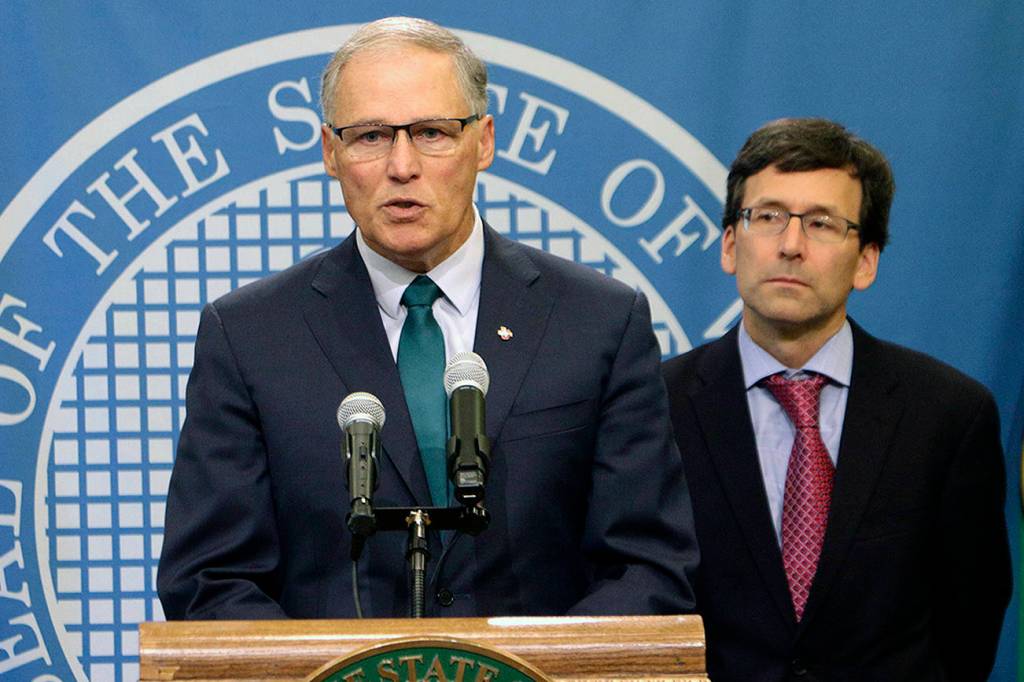
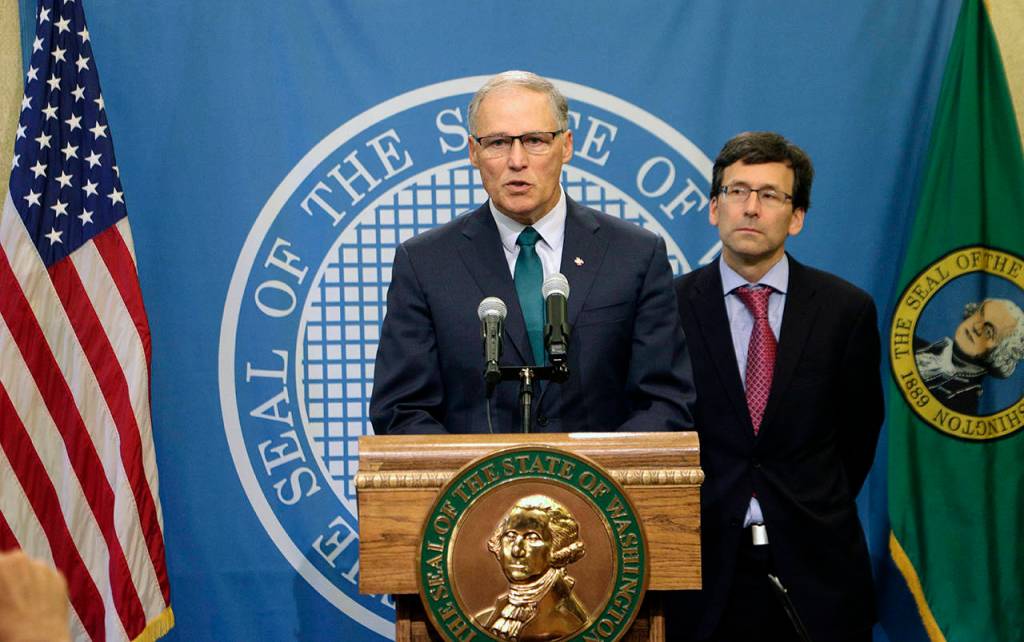
“They will end their lives in prison,” Gov. Jay Inslee proclaimed at a news conference with Attorney General Bob Ferguson. “The only question is in which year will they die.”
To members of Biendl’s family, the decision hurt deeply.
“We are angry about the Supreme Court ruling,” the family said in a statement. “Jayme’s murderer was serving life without parole when he strangled her. This literally means that he got away with murder of an innocent person and that action has no consequence for him.”
Thursday’s ruling makes Washington the 20th state to do away with capital punishment by legislative act or court decree.
It came in the case of Allen Eugene Gregory, a black man who was convicted of raping, robbing and killing a 43-year-old woman in 1996. His lawyers argued the death penalty is applied arbitrarily and not proportionally as the state Constitution requires.
“The death penalty is unequally applied — sometimes by where the crime took place, or the county of residence, or the available budgetary resources at any given point in time, or the race of the defendant,” Chief Justice Mary Fairhurst wrote in the lead opinion.
She added: “Our capital punishment law lacks ‘fundamental fairness.’”
Defense lawyers have challenged the death penalty on those grounds, noting the state’s mass murderers and serial killers, Green River killer Gary Ridgway among them, had received life terms, not death.
In this case, critics of the death penalty provided the court with data, including a statistical analysis by University of Washington sociologists. Their report showed that although prosecutors were not more likely to seek the execution of black defendants, juries were about four times more likely to sentence black defendants to death.
“Now the information is plainly before us,” Fairhurst wrote. “To the extent that race distinguishes the cases, it is clearly impermissible and unconstitutional.”
Inslee, the second-term Democrat who ordered a moratorium on executions in 2014, said the decision ends its use immediately.
“This morning, justice in Washington state is less capricious and less tainted by racial bias,” he said at the news conference. “The state Supreme Court decision will stand as a beacon for equal justice in the state of Washington.”
Thursday’s decision means prosecutors no longer can seek the death penalty, Ferguson said.
This year in Snohomish County, defense attorneys had been building a case against a death sentence for William Earl Talbott II, 55, the SeaTac trucker charged with kidnapping and brutally murdering a young Canadian couple in 1987.
Talbott’s arrest made international headlines in spring. He’s awaiting trial on aggravated murder charges, for the deaths of Jay Cook, 20, and Tanya Van Cuylenborg, 18, who were on a road trip from Vancouver Island.
If found guilty as charged, the only possible sentence for Talbott would be life in prison.
Snohomish County Prosecutor Mark Roe said he hadn’t read the entire 58 pages of opinion from the Supreme Court, but based on what he had seen he called it “the wrong decision.”
Though the death penalty is sought rarely, its existence can influence outcomes, he said.
He noted that he charged the 19-year-old man who killed three people at a Mukilteo house party with three counts of aggravated murder — each of which carries a death sentence. Within five months, the man pleaded guilty and is now locked up for life.
Roe also points out that voters wanted the death penalty and thus they — not the Supreme Court, the governor or the Legislature — should be the ones deciding if it stays on the books.
The greater pain inflicted by Thursday’s decision, he said, is on the family members of victims like the Biendls, “who are looking at a world where there is no punishment for killing her. I don’t think that’s right.”
Justices do leave open the possibility for lawmakers to revise the law in a way that’s constitutional.
Inslee said they shouldn’t try. He said it “would be a waste of time” because he would veto any legislation aimed at retaining capital punishment.
Ferguson said he’ll work to get the existing statute erased. A bill he drafted to repeal it squeaked through the Senate earlier this year. It passed on a 26-22 vote with five Republicans voting for it and four Democrats — including Sen. Steve Hobbs, D-Lake Stevens — opposed.
It did not receive a vote in the Democrat-controlled House.
“I think this is the year the House of Representatives takes the final step and takes it off the books,” Ferguson said.
Sen. Marko Liias, D-Lynnwood, said he’s confident the Senate will act quickly to give the House more time to deliberate.
“The Supreme Court made it clear the death penalty is morally wrong,” he said. “Hopefully that will help persuade a few members that it doesn’t make sense to have an unconstitutional law on the books.”
Sen. Guy Palumbo, D-Maltby, voted for the bill and will do so again.
“There are simply too many wrongful convictions. It’s a complete waste of taxpayer funds based on the appeal costs, and ultimately, I heard from a number of victims’ families over the last two years about how they also don’t support it,” he said in an email.
But Sen. Keith Wagoner, R-Sedro-Woolley, a death penalty supporter, isn’t moved by the court’s decision.
He said he found the court’s racial discrimination argument “flimsy,” as most of those executed in Washington were white.
On Thursday, the Biendl family took exception to Inslee’s characterization of conversations he held with victims’ families before declaring the moratorium.
At the news conference, Inslee said one woman expressed frustration at having to relive the tragedy through the lengthy process of appeals.
“These families aren’t going to have to wait 20 years to know what’s going to happen,” Inslee said. “The heinous people are going to die in prison. That is an assurance we can give to these families.”
In its statement, the Biendl family said that is not what their relative meant.
“They meant that in a cut-and-dry case such as this, why should it have to drag out that long?” the statement read. “The governor should in no way take anything we said as endorsement of his decision to put a moratorium on the death penalty. Nor are we in any way pleased about the Supreme Court’s decision to abolish it.”
Eric Stevick and Caleb Hutton contributed to this story.
Material from the Associated Press was used in this story.
Jerry Cornfield: 360-352-8623; jcornfield@herald net.com. Twitter: @dospueblos.
This 2014 report of the cases of six convicted murderers show how the death penalty played out in Snohomish County since the state’s capital punishment law was approved in 1981.