Hurricane Harvey smashes buildings on Texas coast; 1 killed
Published 1:30 am Friday, August 25, 2017




By Frank Bajak / Associated Press
Long after the storm came ashore, the full scope of damage had yet to emerge, largely because weather conditions kept emergency crews out of many of the hardest-hit places between Corpus Christi and Houston.
And the system’s most destructive powers were just beginning. Rainfall that will continue for days could dump more than 40 inches of water and inundate many communities, including dangerously flood-prone Houston, the nation’s fourth-largest city.
“Our focus is shifting to the extreme and potentially historic levels of flooding that we could see,” said Eric Blake, a specialist at the National Hurricane Center in Miami.
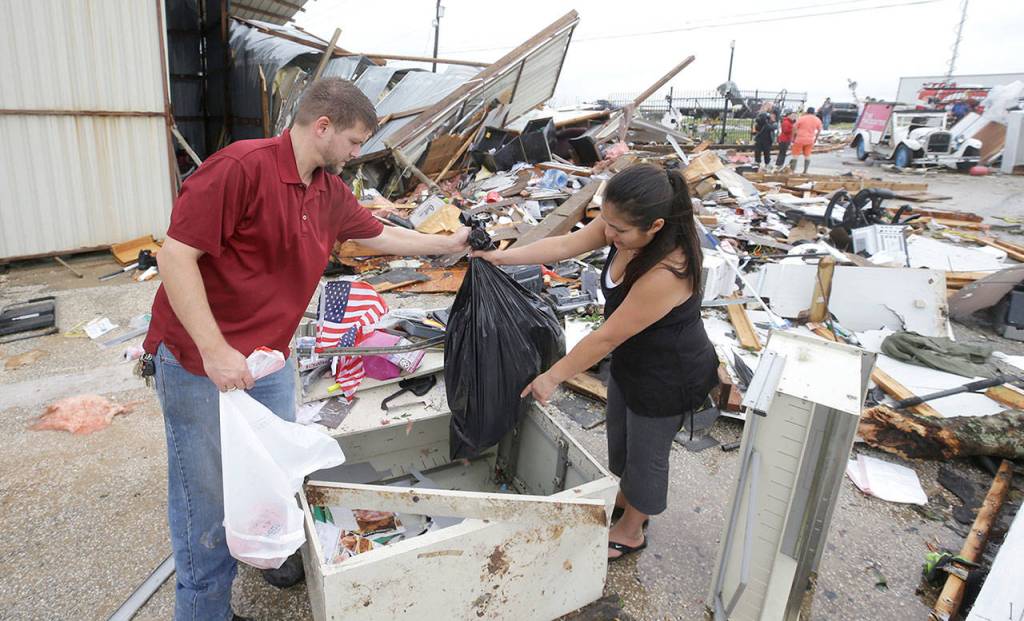
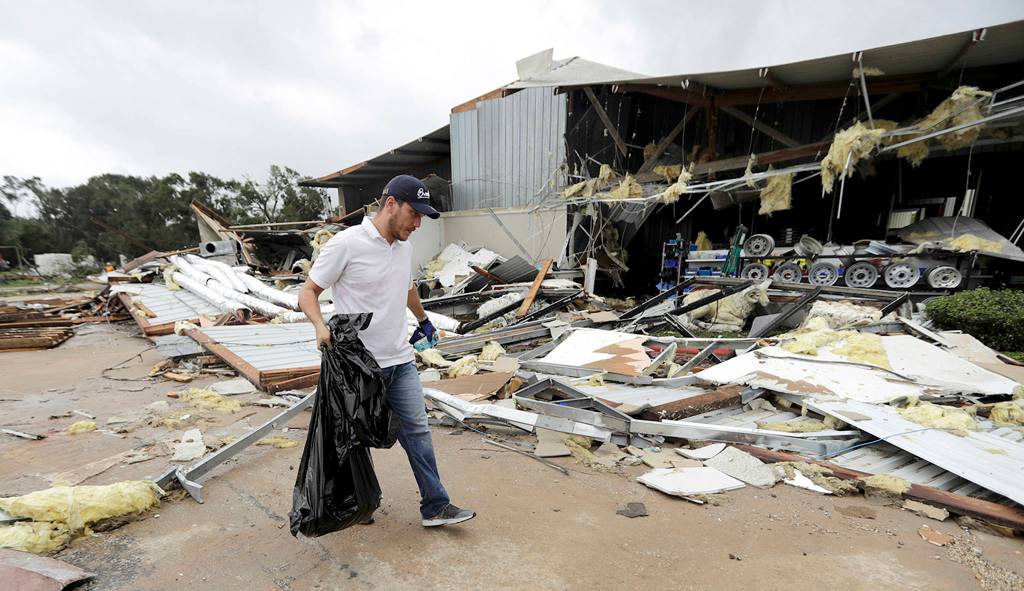
Some of the worst damage appeared to be in Rockport, a coastal city of about 10,000 that was directly in the storm’s path. The mayor said his community took a blow “right on the nose” that left “widespread devastation,” including homes, businesses and schools that were heavily damaged. Some structures were destroyed.
Mayor Charles “C.J.” Wax told The Weather Channel that the city’s emergency response system had been hampered by the loss of cellphone service and other forms of communication.
On Friday, Rockport Mayor Pro Tem Patrick Rios offered ominous advice, telling the station that people who chose not to evacuate should mark their arm with a Sharpie pen, implying that the marks would make it easier for rescuers to identify them.
Citing a county judge, the Austin American-Statesman reported one death from Harvey in Rockport, and 12 to 14 people injured.
Elsewhere in the storm’s immediate aftermath, Coast Guard helicopters rescued 18 people from boats and barges in distress, said Capt. Tony Hahn, commander of the Corpus Christi sector.
Several boats sank in port at Corpus Christi, and there will be a lot of work to do before it can reopen. Because the city is the third-largest petrochemical port in the nation, authorities will also be on the lookout for spills, Hahn said.
About 4,500 inmates were evacuated from three state prisons in Brazoria County south of Houston because the nearby Brazos River was rising.
The fiercest hurricane to hit the U.S. in more than a decade came ashore late Friday about 30 miles northeast of Corpus Christi as a mammoth Category 4 storm with 130 mph winds.
By dawn, nearly 300,000 consumers were without power in the coastal region, and nearly 20 inches of rain had fallen in some places.
Harvey weakened to a tropical storm by early afternoon, with maximum sustained winds falling to about 70 mph. The storm was centered about 60 miles southeast of San Antonio. It was moving north at 2 mph, the hurricane center said.
The hurricane posed the first major emergency management test of President Donald Trump’s administration.
Trump met with his Cabinet and other senior administration officials to discuss the federal response to the damage and flooding, the White House said Saturday in a statement.
The president held a video conference from Camp David in which he instructed relevant departments and agencies to “stay fully engaged and positioned to support his number one priority of saving lives,” the statement said.
Trump, who on Friday signed a federal disaster declaration for coastal counties, also reminded department heads that the full impact of the storm will not be apparent for days. On Twitter, he commended the head of the Federal Emergency Management Agency for his handling of the disaster.
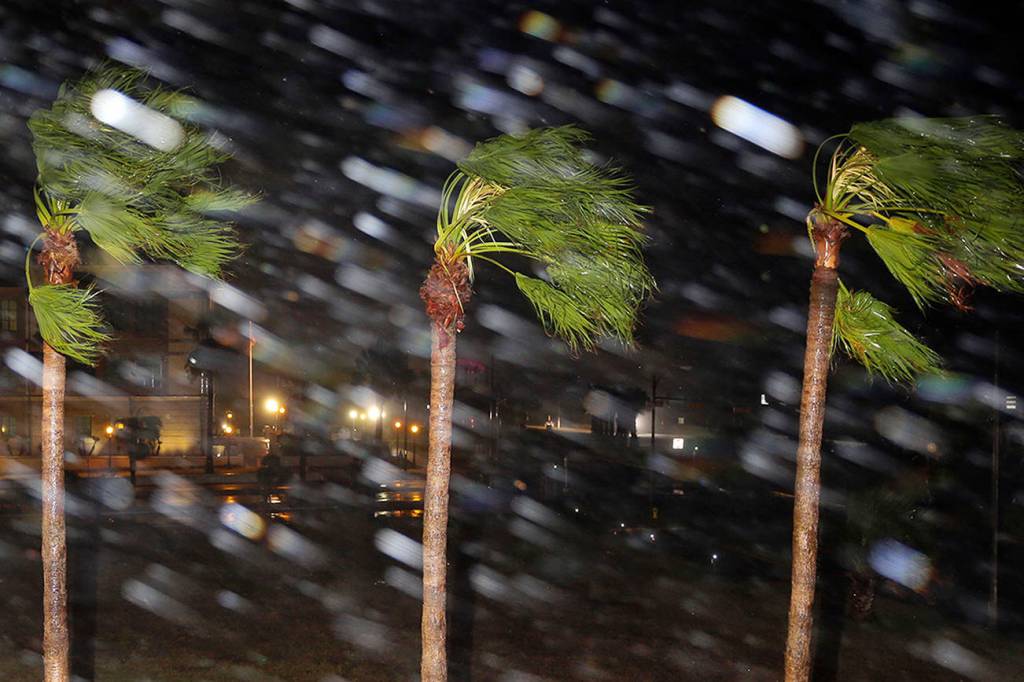
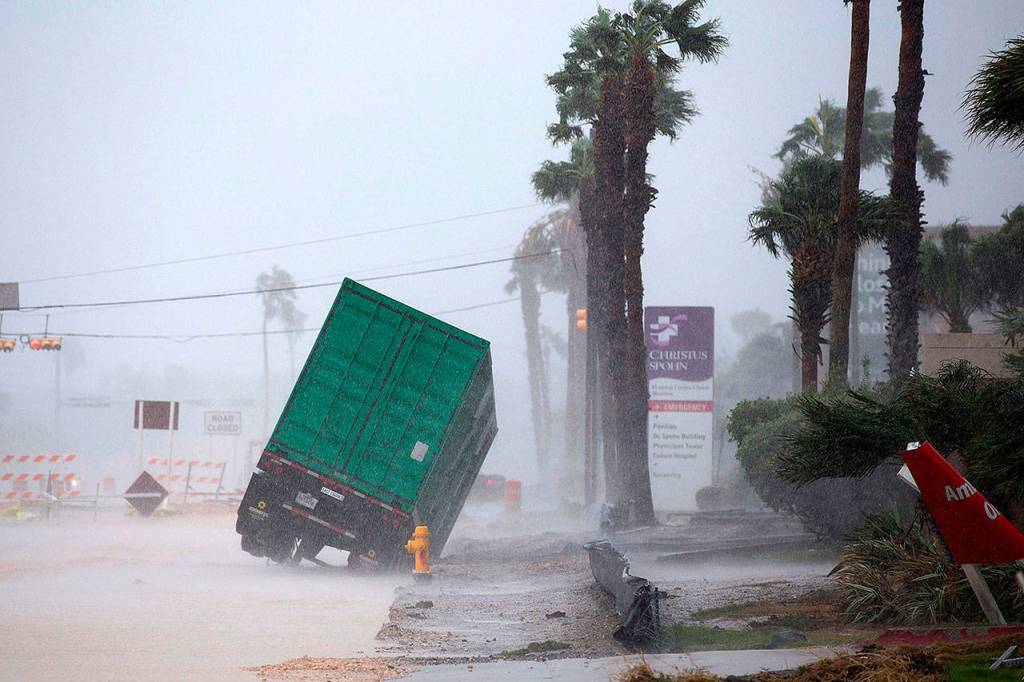
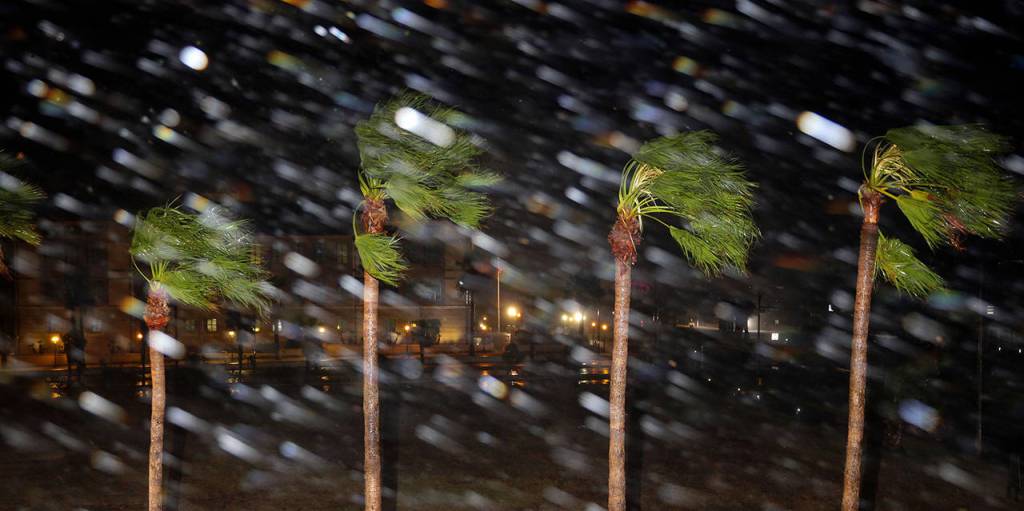
In Corpus Christi, the major city closest to the storm’s center, wind whipped palm trees and stinging sheets of horizontal rain slapped against hotels and office buildings along the seawall as the storm made landfall.
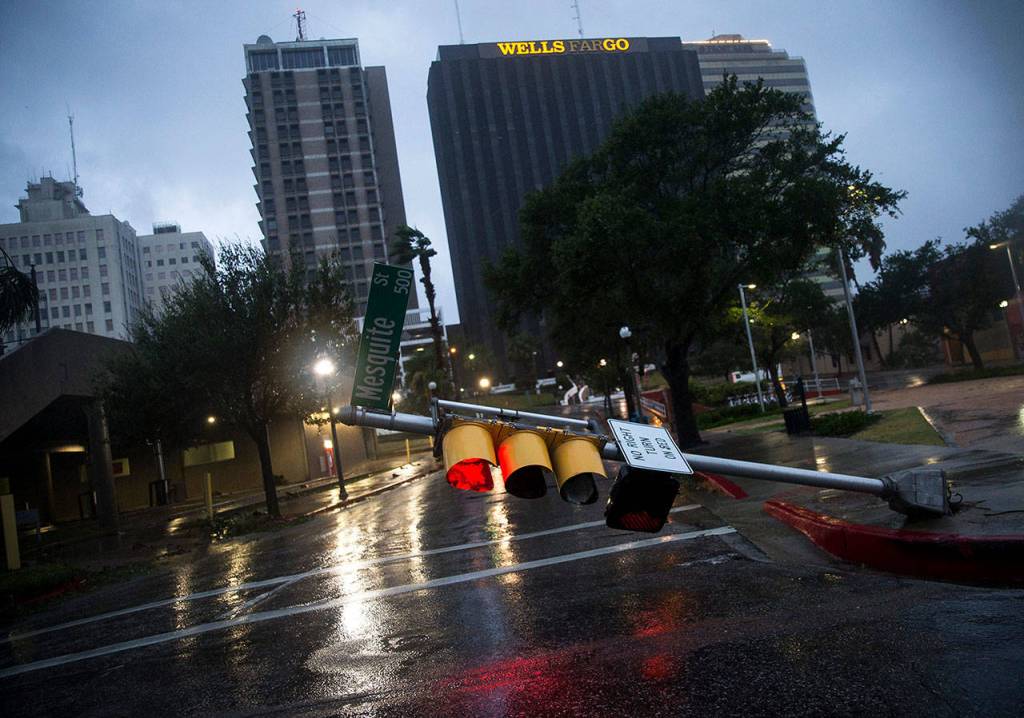
Daybreak revealed downed lamp posts and tree limbs and roof tiles torn off buildings. The city’s marina was nearly unscathed, save an awning ripped from a restaurant entrance and a wooden garbage bin uprooted and thrown.
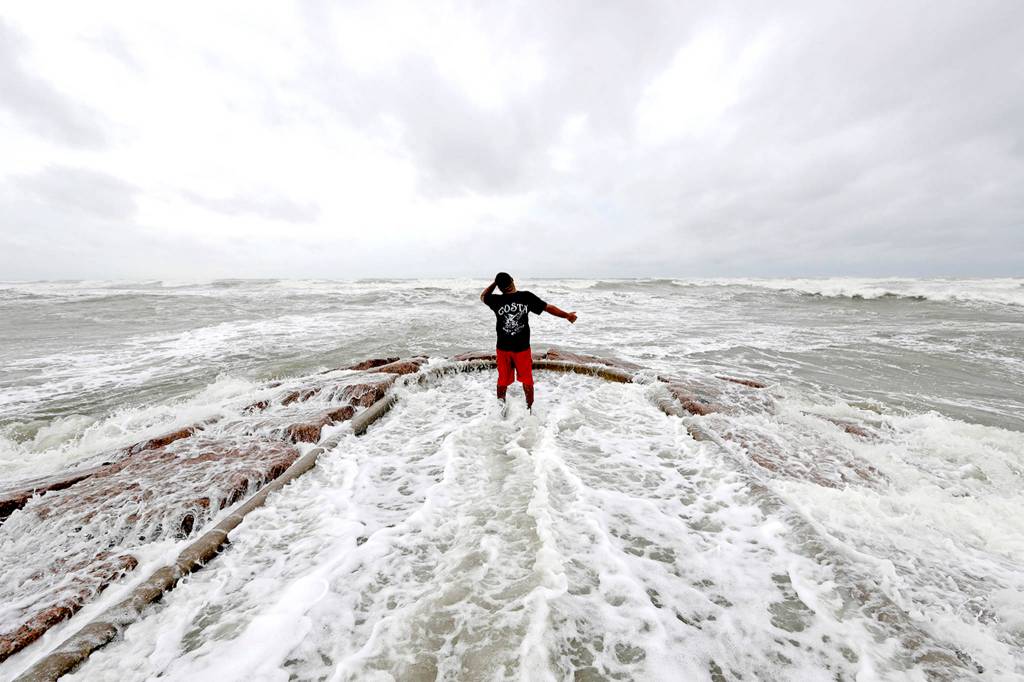
Along Interstate 45 leaving Galveston, the rain was intense that drivers were to stop under bridges because they could not see in front of them.
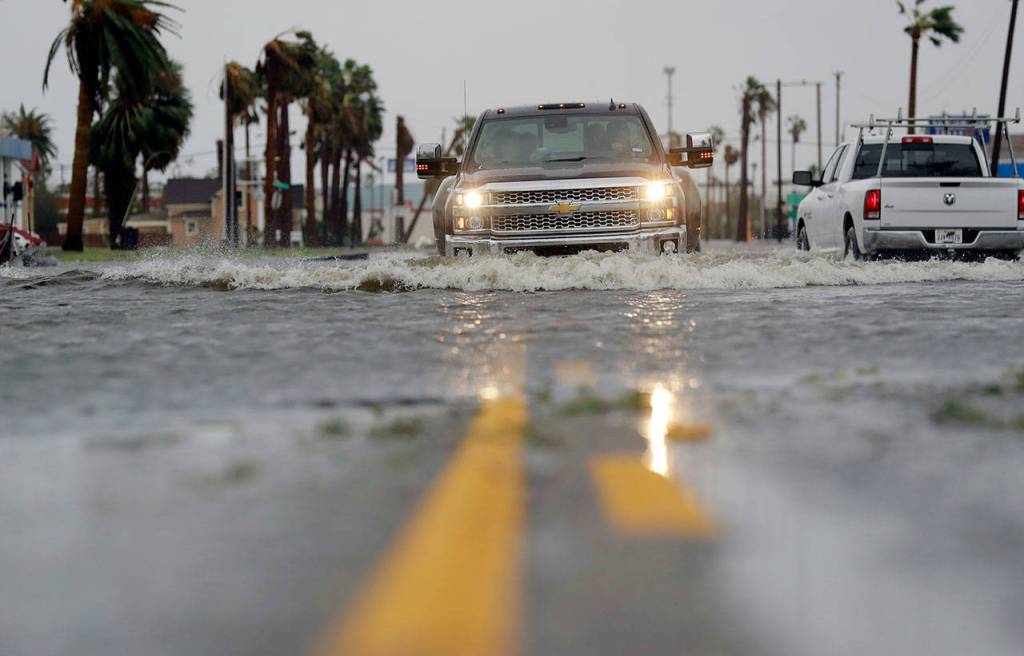
In Houston, rain fell Saturday at nearly 3 inches an hour, leaving some streets and underpasses underwater. The many drainage channels known as bayous that carry excess water to the Gulf were flowing freely but rising.
“Flooding is a minor issue so far,” Harris County Judge Ed Emmett, the chief administrator of the county that includes Houston, said. “Most of the watersheds are well within banks, but we’re not out of this.”
Francisco Sanchez, with the Harris County Emergency Management Office, said the storm would “linger a while.”
“Someone is going to get those very high rainfall totals,” he said. “Hopefully it’s not us, but we’re in that possibility area.”
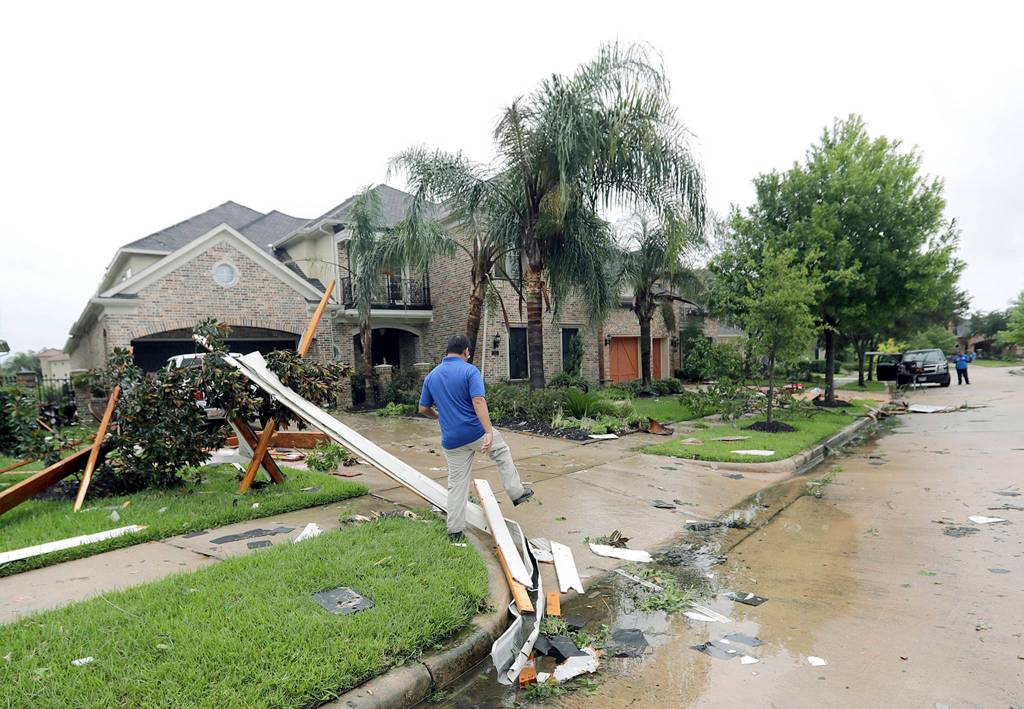
Tornadoes, which are often spawned by hurricanes as they come ashore, left damage at a warehouse in Katy, a suburb west of Houston, and in a Fort Bend County neighborhood southwest of the city where several dozen homes were hit.
“I think half of my house is sitting out in the middle of the street,” resident Jamie Ellis said.
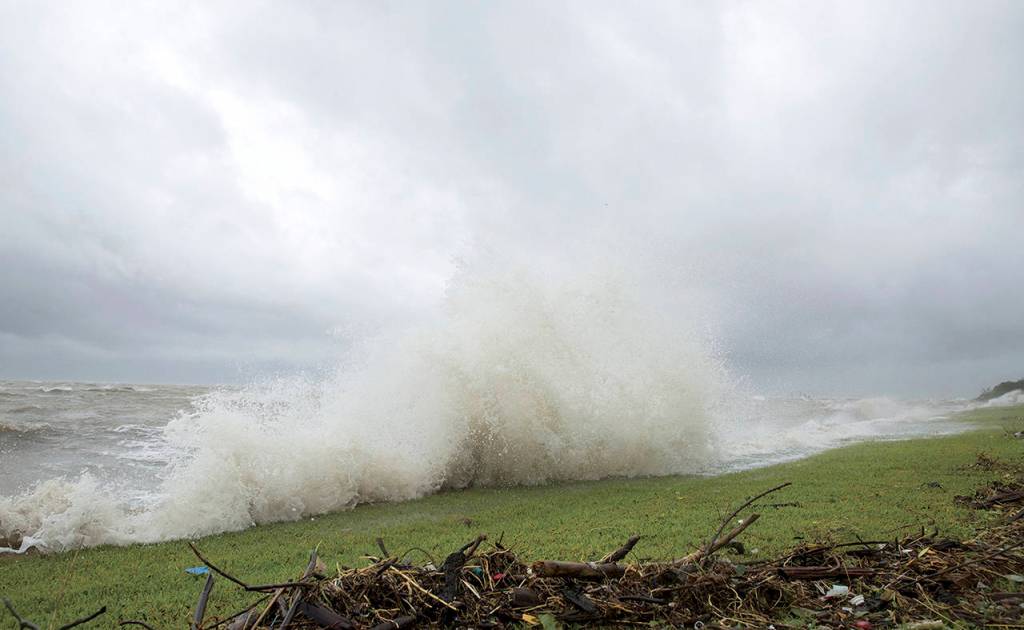
Fueled by warm Gulf of Mexico waters, Harvey grew rapidly, accelerating from a Category 1 early Friday morning to a Category 4 by evening. Its transformation from an ordinary storm to a life-threatening behemoth took only 56 hours, an incredibly fast intensification.
Harvey came ashore as the fiercest hurricane to hit the U.S. in 13 years and the strongest to strike Texas since 1961’s Hurricane Carla, the most powerful Texas hurricane on record.
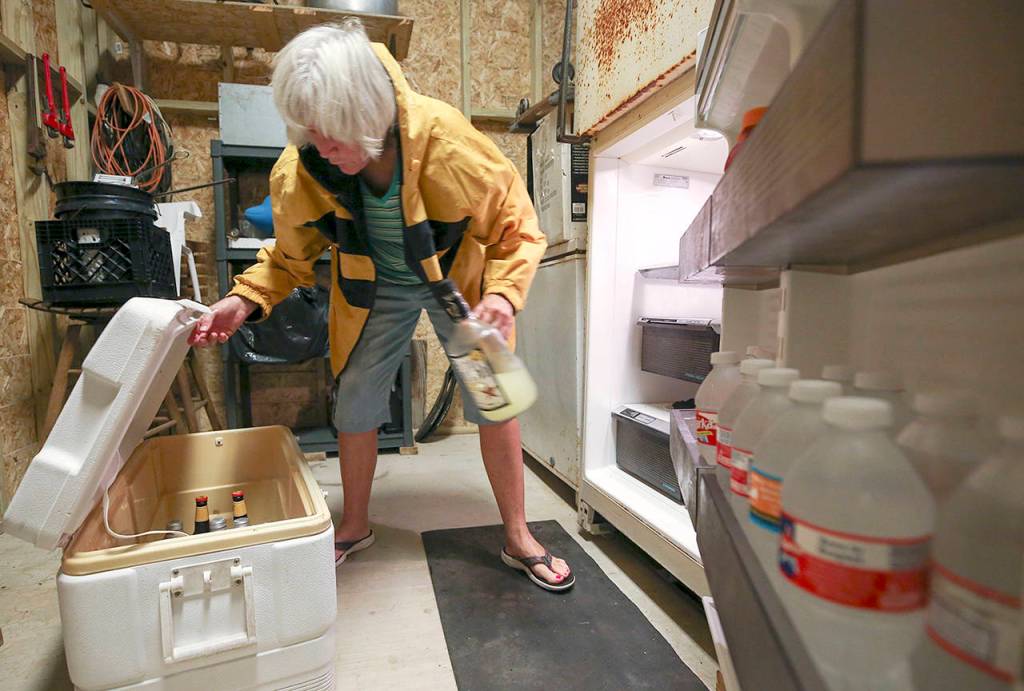
The storm’s approach sent tens of thousands of people fleeing inland. Families who escaped Rockport were worried about neighbors and whether their homes are still standing.
Johanna Cochran was panicking over whether her house or the McDonald’s where she works survived the storm. She and her boyfriend evacuated to a San Antonio shelter.
Another Rockport resident, Pamela Montes, said she knew many people who stayed behind because “no one felt like it was going to hit.”
Just hours before the projected landfall, the governor and Houston leaders issued conflicting statements on evacuation.
Gov. Greg Abbott urged more people to flee, but Houston authorities recommended no widespread evacuations, citing greater danger in having people on roads that could flood and the fact that the hurricane was not taking direct aim at the city.
The last Category 4 storm to hit the U.S. was Hurricane Charley in August 2004 in Florida. Superstorm Sandy, which pummeled New York and New Jersey in 2012, never had the high winds and had lost tropical status by the time it struck. But it was devastating without formally being called a major hurricane.
Harvey is the first significant hurricane to hit Texas since Ike in September 2008 brought winds of 110 mph to the Galveston and Houston areas, inflicting $22 billion in damage.
Associated Press writers Michael Graczyk, Juan Lozano and Nomaan Merchant in Houston; Seth Borenstein and Catherine Lucey in Washington; Tammy Webber in Chicago; David Phillip in Dickinson, Texas; and Diana Heidgerd, Jamie Stengle, David Warren, Claudia Lauer and Terry Wallace in Dallas contributed to this report.