Another voting method might have stopped Trump
Published 4:55 pm Wednesday, May 11, 2016
It should be obvious to all by now that Donald Trump knows nothing of what he speaks. His disastrous economic ideas are but the latest in a litany of nonsensical proposals.
Yet, and still, his supporters — that Republican base so carefully nurtured by the very GOP operatives and politicians who now find its members so distasteful — proclaim his supremacy with such bracing observations as, “Well, at least he’s got [spheres],” or “At least he speaks his mind,” or “At least he doesn’t suck up to anybody.”
These selections from the morning mail share a common element — “at least” — which seems apt enough, though “the least” seems more to the point. Trump was the least of so many other Republican candidates who offered governing experience, knowledge and even, in some cases, wisdom.
So why didn’t these superior candidates win, especially given his consistently low favorability ratings? Indeed, both Trump and Hillary Clinton, presumptively speaking, would be the most disliked nominees at this stage of any in the past 10 presidential cycles, according to a FiveThirtyEight analysis.
Trump’s average “strongly unfavorable” rating of 53 percent — 16 points higher than Clinton’s — is at least 20 points higher than every other candidate’s rating since 1980.
Never mind the many elected Republican leaders who are distancing themselves from his candidacy. Not enough of them, to be sure, which is disgraceful and surely will be noted by future historians as cowardly. My own running list of sycophants remains handy for the duration of their likely shortened political careers. Nearly half of voters say they’re less likely to support candidates who have aligned themselves with Trump, according to Morning Consult, a group that conducts weekly polls of 2,000 voters.
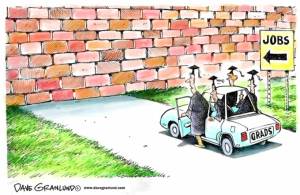
To answer my earlier question, the better candidates didn’t win because, obviously, so many of them siphoned votes from stronger ones, giving Trump the lead and all-important momentum. Thus, the constant refrain from Trump supporters that the “establishment” is ignoring the “will of the people” is only true to a point. Trump is the choice of a plurality of the GOP, but not of a majority — a distinction with a crucial difference.
At this stage, as the GOP convenes its circular firing squad composed of party leaders, operatives, hacks, flacks, politicos — if you’ll pardon the redundancy — and, yes, certain media, they might better expend their energies considering alternative voting methods that might have prevented Trump’s ascendancy and likely would prevent future demagogues.
One of these methods, already used by a variety of professional organizations to elect officers, as well as by the United Nations to elect the secretary-general, uses an “approval” ballot by which voters rank all the candidates of whom they approve rather than select just one. Far from new, this idea was suggested in 1770 by French mathematician and astronomer Jean-Charles de Borda, who expressed concern that several similar candidates would split the majority vote and allow a non-consensus candidate to win.
Voila.
Through election by order of merit, now known as the “Borda count,” each candidate was awarded a number of votes equal to the number of candidates below him on each voter’s ballot. The candidate with the most votes won.
Fast-forward a couple of centuries to 1977 when New York University politics professor Steven J. Brams and decision theorist Peter C. Fishburn devised “approval voting,” which is similar but even simpler. By their method, voters would cast a vote for each candidate of whom they approve, in no particular order. The candidate with the most votes would win.
Another ranking method, advanced recently in The New York Times by economists Eric Maskin and Amartya Sen, was developed by 18th-century mathematician and political theorist Marquis de Condorcet. This process called for ranking candidates in order of approval — or not ranking them at all as an indication of disapproval. The candidate with the highest approval ranking would win.
Longtime voters might find such suggestions jarring, but a Trump nomination could be a rule-changer. He can brag that he has won a couple dozen contests but the reality is that another of the other primary candidates might have beaten him if not for voters scattering their ballots among so many. This is to say, the majority of Republican voters rejected Trump.
Had an approval system been in place, it’s conceivable that John Kasich could be accepting the nomination in July. And Trump would be piling up approval ratings where he belongs — on reality TV.
Kathleen Parker’s email address is kathleenparker@washpost.com.