
An endearing slice of Portugal is the Douro River Valley, the winding, terraced region that produces the country’s beloved port wine. This is Portugal’s answer to Germany’s romantic Rhine River Valley. But unlike the Rhine, the Douro was never a strategic military location. So, rather than castles and stony ramparts, visitors encounter farms and sleepy villages. The only thing fortified here … is the wine.
The Douro region, where port is produced, stretches along the river of the same name, about 60 miles inland from the city of Porto. (The second largest city in Portugal, Porto is where the Douro River spills into the Atlantic Ocean.) Joy-riding through the region you enjoy steep, twisting valleys and tidy terraces as far as the eye can see. Depending on when you visit, the hillside can shift in color, from dusty brown in winter, to scrubby green in summer, to glowing red and gold in fall.
The Douro Valley is the only place that can legally produce what’s called “port wine,” thanks to the Marques de Pombal, who demarcated the region in 1756. Visiting here, you can appreciate just how much hard work it was and still is, to produce traditional port wine. This vine-draped and ever-changing terrain was sculpted by centuries of hardy farmers, who laboriously terraced the land. And to this day, it remains a labor of love, as grapes are still generally picked by hand and crushed the traditional way — by foot — as machines are unable to achieve high-quality results.
Since port wine is a blend of several types of grapes, most port-producing vineyards, called quintas, grow a few different varieties of grapes. Unlike traditional wine, which undergoes fermentation in full, port is a fortified wine. During fermentation, brandy is added to port wine, thereby halting the process and preserving some of the sugars from the grapes. This is what gives port its signature sweetness.
After fermentation, port traditionally stays in the Douro Valley for one winter after it’s made, as the cold temperatures encourage the wine and brandy to marry. It’s then transported by truck to port-wine lodges in Porto, where the more humid, mild climate at sea level is ideal for aging. (A dozen or so port-wine lodges near Porto welcome visitors for tastings and tours to see the barrels and vats in which the wine is maturing.)
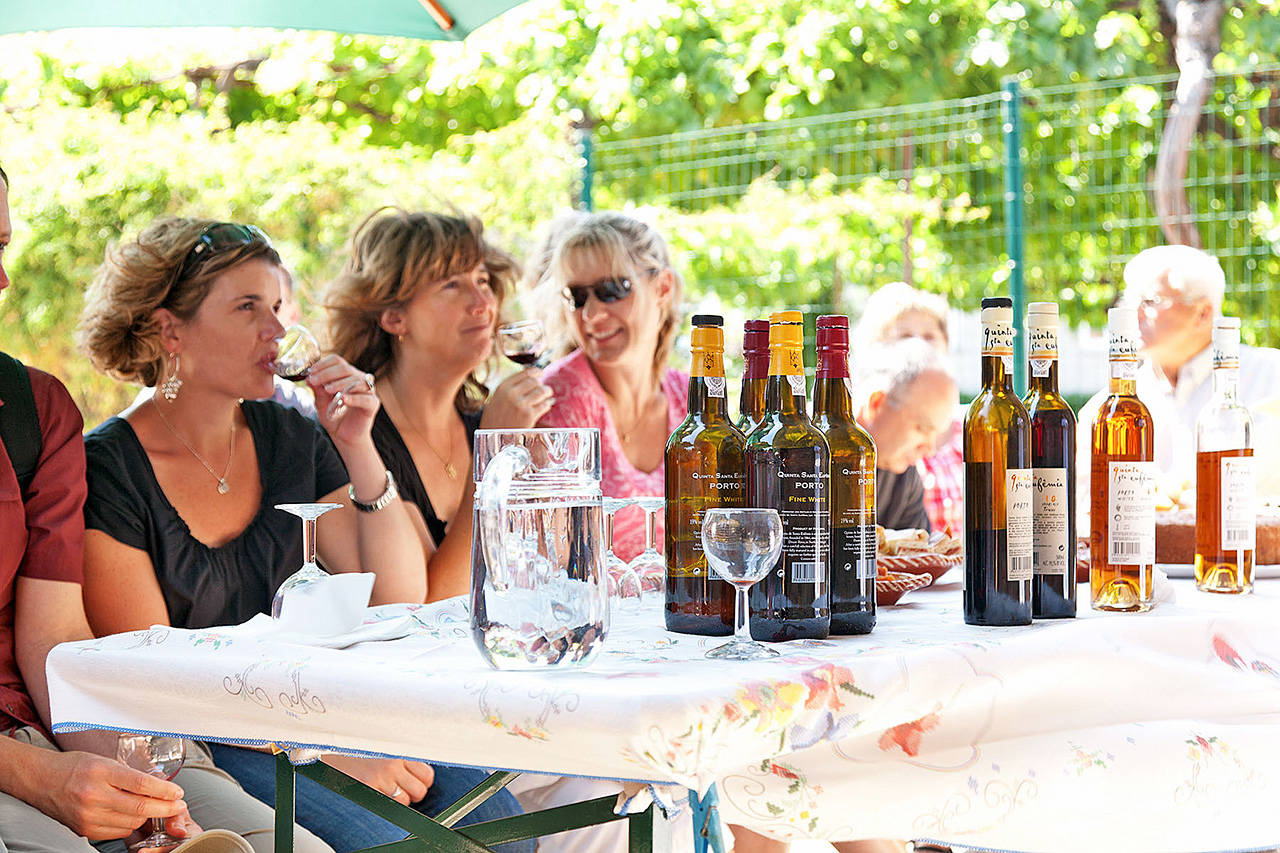
The best way to fully experience the Douro Valley is to rent a car and drive, so you can visit several quintas. While some are private, many welcome travelers. Of the quintas that are open to the public, most offer a tour, followed by a tasting of several wines. Some rent out rooms.
Without a car, a slow but scenic way to visit is to take a boat from Porto to the heart of the Douro (a seven-hour trip). There are also trains that run between Porto and the two main towns in the region: Peso da Regua and Pinhao. Neither town is particularly exciting, but both have hotels and make a decent home base for visiting the area’s quintas.
Regua, which feels more urban and functional, is home to two main streets and the Douro Museum, with exhibits that explain the landscape, industry, culture and geology of the region. A rabelo — the traditional flat-bottomed boat that was once used to transport barrels of port downriver from Douro to Porto — is permanently moored to the rooftop. Pinhao — even smaller and with just one main street — feels more deeply rooted in Douro culture and scenery.
Compare quintas with the help of a guidebook, online research or local advice. One good place is Quinta do Panascal, which produces the popular Fonseca port. Though a commercial operation, it feels special due to its tucked-away location — and because it’s one of the few places that lets visitors roam free among its terraced vineyards.
But my favorite ones to visit are the small and family-run quintas, where you get the chance to meet the latest generation of winemakers and appreciate the pride of these artisans, so passionate about their traditions and craft. Two good family-run places that welcome visitors are Quinta de la Rosa near Pinhao and Quinta de Marrocos (near Regua), which also rents rooms in their family farmhouse.
If you have time, it’s worthwhile to spend a night or two at a quinta. You’ll be welcomed like a guest in a local family’s home, and you get to savor the beautiful countryside right outside your window. It’s a memorable experience and the best way to gain an appreciation for this wonderfully drinkable bit of Portuguese culture.
Talk to us
> Give us your news tips.
> Send us a letter to the editor.
> More Herald contact information.