What the infrastructure bill could mean for Snohomish County
Published 1:30 am Sunday, August 15, 2021
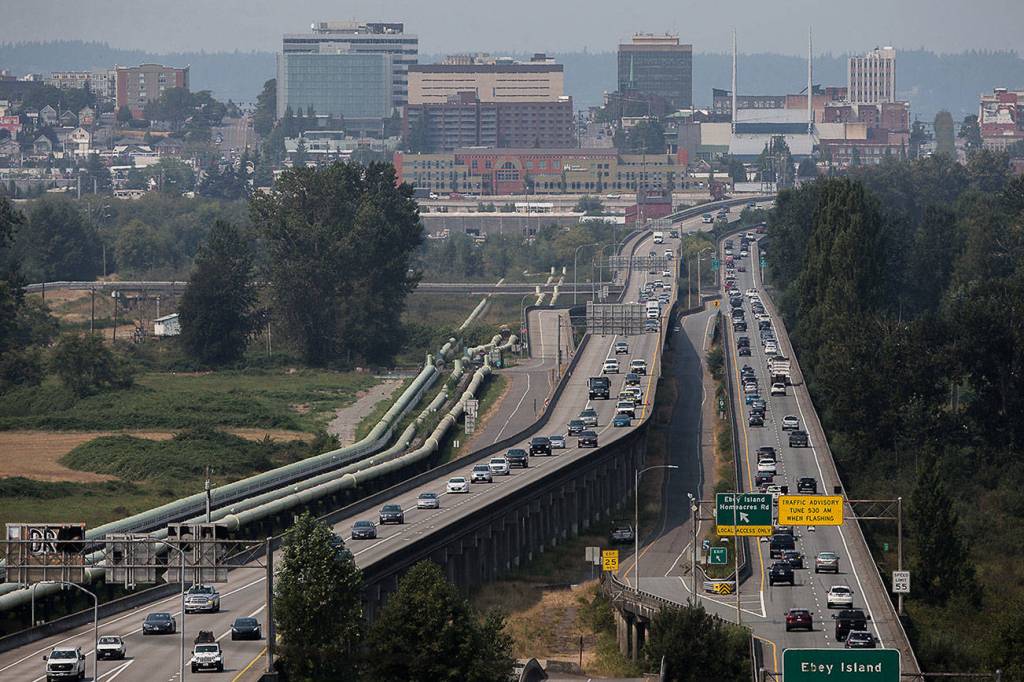


EVERETT — The federal infrastructure bill is expected to bring hundreds of millions of dollars to projects across Snohomish County.
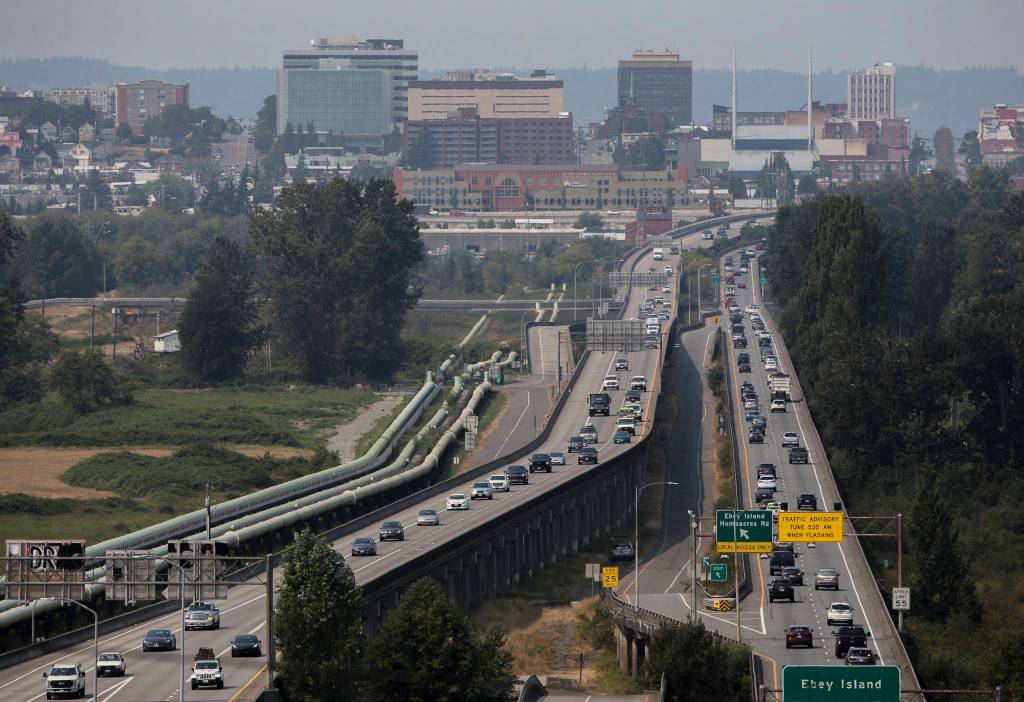
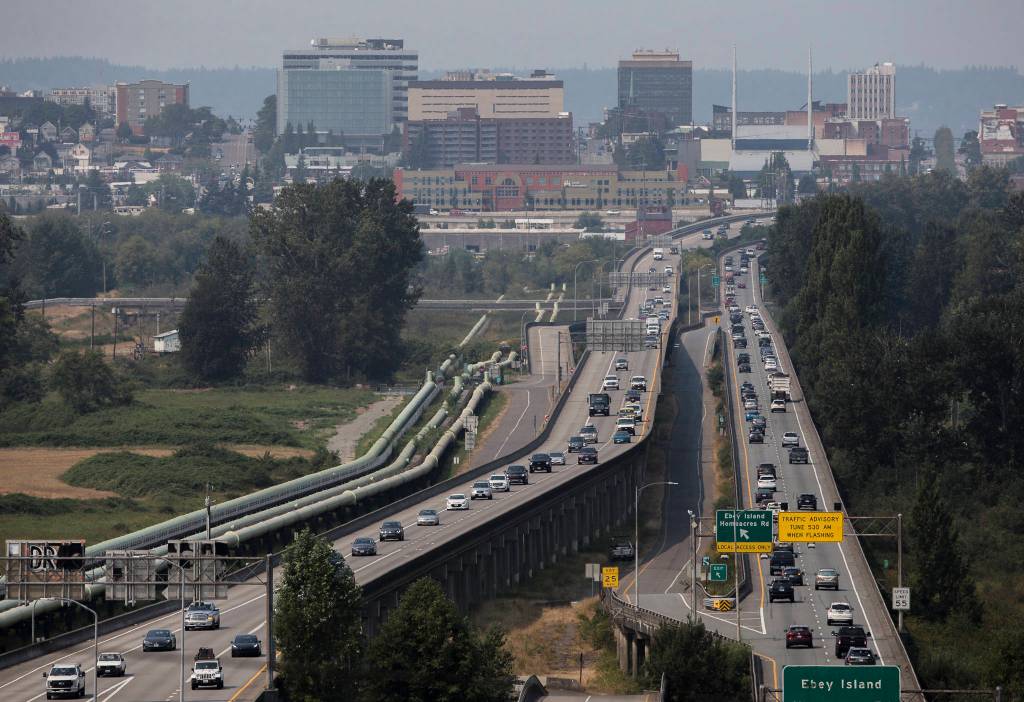
Portions of the $550 billion Infrastructure Investment and Jobs Act could be funneled to the U.S. 2 trestle replacement, low-emission and zero-emission buses and ferries, removing at-grade rail crossings in Edmonds and Marysville and securing light rail to Everett.
“The $381 million in this bill for Sound Transit and additional money for transit agencies will help deal with the continued funding shortfall that Sound Transit has faced since the beginning of the COVID pandemic,” U.S. Sen. Maria Cantwell said. “Getting further into Snohomish County is a must.”
Replacing the westbound trestle is estimated to cost over $1 billion, but securing funding through the Legislature has proven difficult. Two money pots in the bill — $36.7 billion to repair and replace bridges and $5 billion for “mega-projects” that don’t neatly conform to transportation funding programs — could help redo that link between Everett and Lake Stevens.
Based on past funding formulas, $1.79 billion could boost the state’s public transit agencies. Sound Transit, which serves King, Pierce and Snohomish counties, could get $381 million for maintenance backlogs, capital projects and to keep light rail construction to Everett and Tacoma on schedule.
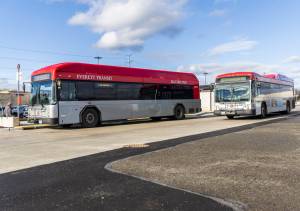
Community Transit could use the calculated $89 million on expanding the Swift bus rapid transit system and buying zero-emission buses, spokesman Martin Munguia said in an email. Everett Transit was identified as possibly receiving $7 million, according to Cantwell’s office. If the city received that money, it would go toward more electric buses to replace the fleet’s diesel and hybrid-diesel coaches, as well as a wireless charging station, spokesman Julio Cortes said.
“In general, this infrastructure package will be helpful as Community Transit continues to expand equitable transportation options to meet Snohomish County’s growth,” Munguia said.
Everett leaders also are hopeful for bridge replacement, other transportation improvements and water and wastewater utility infrastructure funds.
The bill also includes $3 billion to eliminate at-grade railroad crossings. Cantwell, an Edmonds resident, cited an incident in 2016, in which a person died after running onto the tracks ahead of an approaching train. The locomotive was stationary for almost three hours, blocking both crossings at Dayton and Main streets.
“This required first responders to literally crawl through the rail cars to aid a pregnant woman who was due to give birth,” Cantwell said in March.
A report she authored then noted that to fix fewer than half of the 50 highest-priority crossings in Washington would cost over $830 million. Edmonds and Marysville are both identified as priority crossings. Separating traffic from the railroad has long been a concern for Marysville, but the solutions are too expensive for the city alone.
“As with most funding opportunities, if this is a viable option and the funding program fits our project needs, then we will pursue funds,” Marysville spokeswoman Connie Mennie said in an email. The city’s priority is to create railroad over-crossings at Grove Street and at 156th Street NE.
Improving fish passage accounts for about $1.5 billion of the bill. Cantwell wrote the provision for $1 billion toward the National Culvert Removal, Replacement and Restoration Grant Program, and another $400 million is marked for a new community-based restoration program focused on removing fish barriers.
State agencies are required by a court decision to make road crossings navigable for fish again.
The state has 3,965 highway crossings on fish-bearing waters, according to a Washington State Department of Transportation report in June. Over half are barriers to fish passage, including 2,040 culverts that are not adequately sized.
Snohomish County owns and is responsible for 1,731 stream-crossing culverts. Of those, 327 are partial barriers and 209 are total barriers, said Meghan Jordan of Snohomish County Public Works.
The Washington Department of Fish and Wildlife is working with the county on a complete inventory of county-owned culverts this year. It costs between $300,000 and $1 million to replace each fish-barrier culvert, according to county estimates.
Because the federal money will be distributed through grants, the county will prepare a list of priority projects and identify which can begin construction in the next two years, to improving their chances of securing money.
There’s also $71 million for electric vehicle (EV) charging network expansion statewide.
“Ultimately, the bill would provide opportunities for the PUD to build on our current electric transportation plan, but it would not change our overall philosophy,” PUD spokesman Aaron Swaney said. “We will continue our focus on building a community of EV drivers, optimizing the grid for EV charging and enabling adoption of EVs through incentives, pilots and rates.”
Funding for energy efficiency would help some of the district’s low-income customers, schools and workforce training programs.
The bill also aims to shrink the digital divide with $65 billion for broadband, which the PUD and a consulting firm are studying.
Airports are another arena.
The bill contains $15 billion for the national Airport Improvement grant program, with an estimated $384.7 million to be distributed over five years to airports in Washington through existing funding formulas.
Paine Field is expected to receive $16 million, with Arlington Municipal Airport and Harvey Field in Snohomish each getting $1.48 million.
Airports would have flexibility to use the money not only for projects like maintaining runways but for broader needs, too, like terminal and gate construction, multi-modal projects and low-emission ground service vehicles, according to the bill.
“We welcome the news of these new federal investments,” Arif Ghouse, director of Paine Field in Everett, said in a statement. “Paine Field is a critical transportation asset that accounts for nearly $60 billion in annual economic activity. Investments in Paine Field will help us support our tenants and the economic success of our entire region.”
The ports of Everett and Edmonds are eyeing $6.25 billion in two buckets. Those dollars, which will be given out through a competitive grant process, can be used for maintaining and upgrading port facilities.
“This package would be great for ports as it bolsters existing programs and allows for more investment and modernization of seaport facilities and supply chain logistics,” said Lisa Lefeber, chief executive officer and executive director of the Port of Everett.
The bill also has a few pilot programs that could involve participants from Snohomish County.
For example, there is money for a pilot program for a motor vehicle per-mile user fee. It will be national in scope and they will be looking for volunteers from all 50 states.
Ben Watanabe: bwatanabe@heraldnet.com; 425-339-3037; Twitter @benwatanabe.